
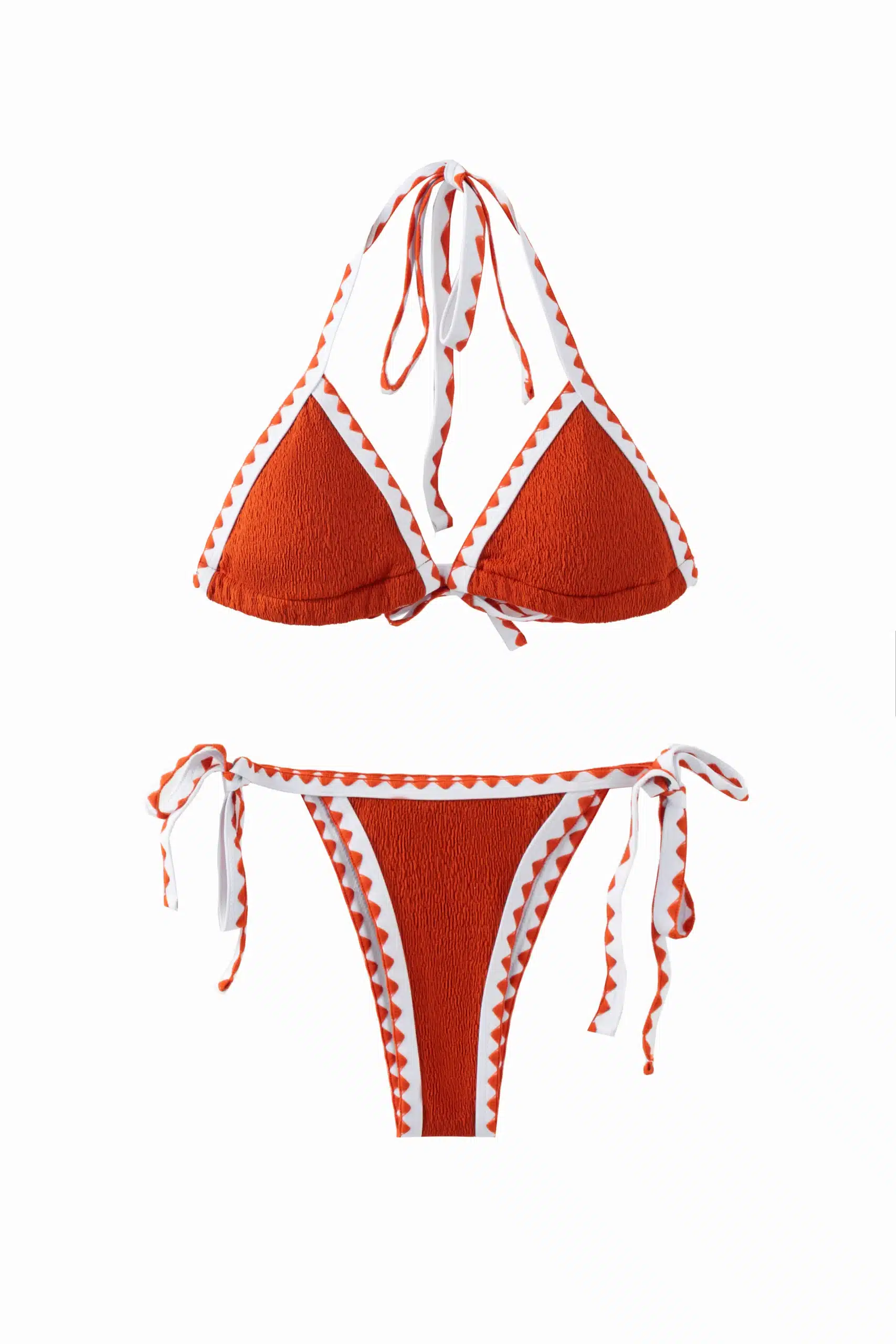
 Bikini
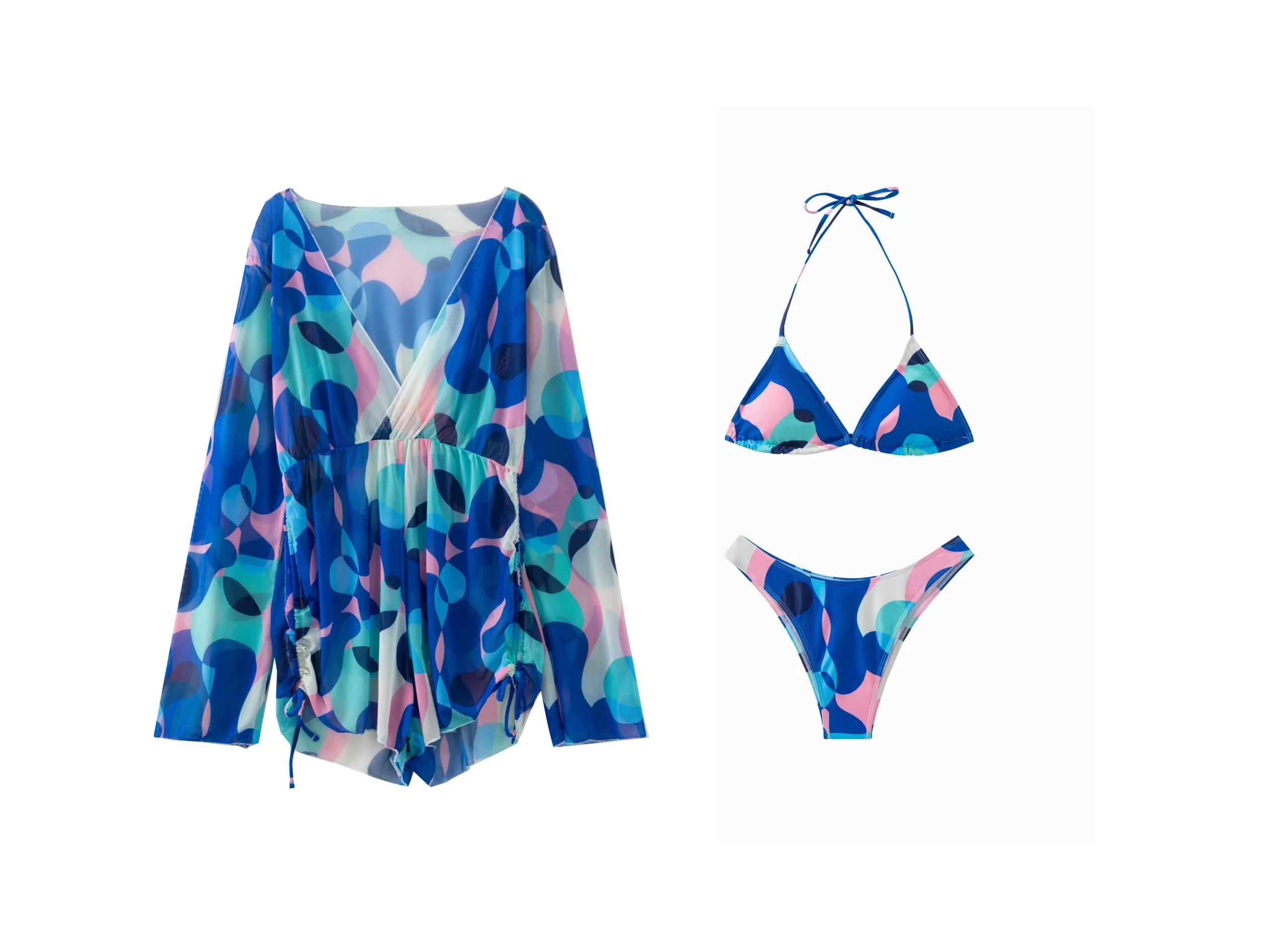 Bikini Cover-Up Set
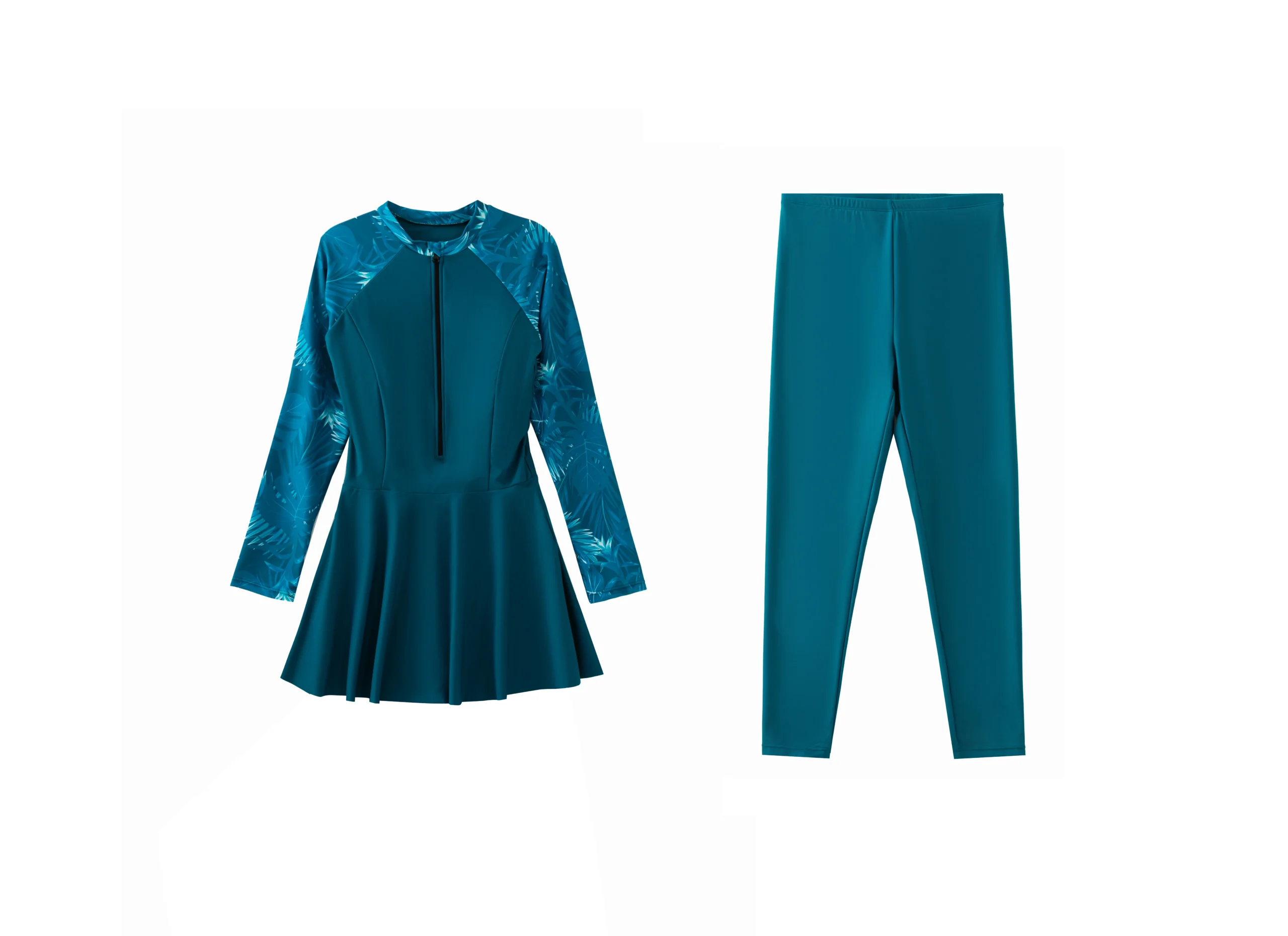 Burkini Swimwear
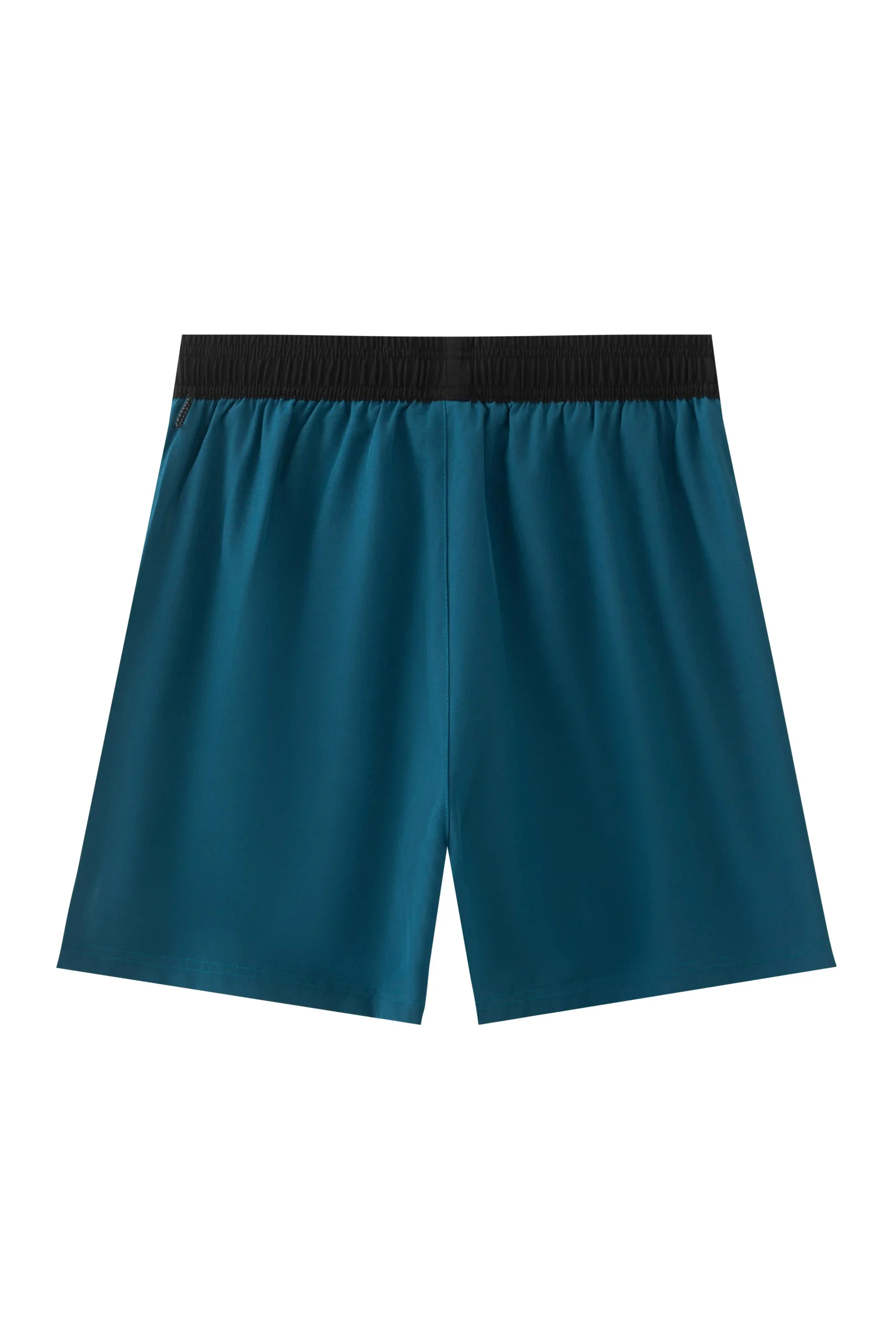 Men Swimwear
 One-Piece Swimsuits
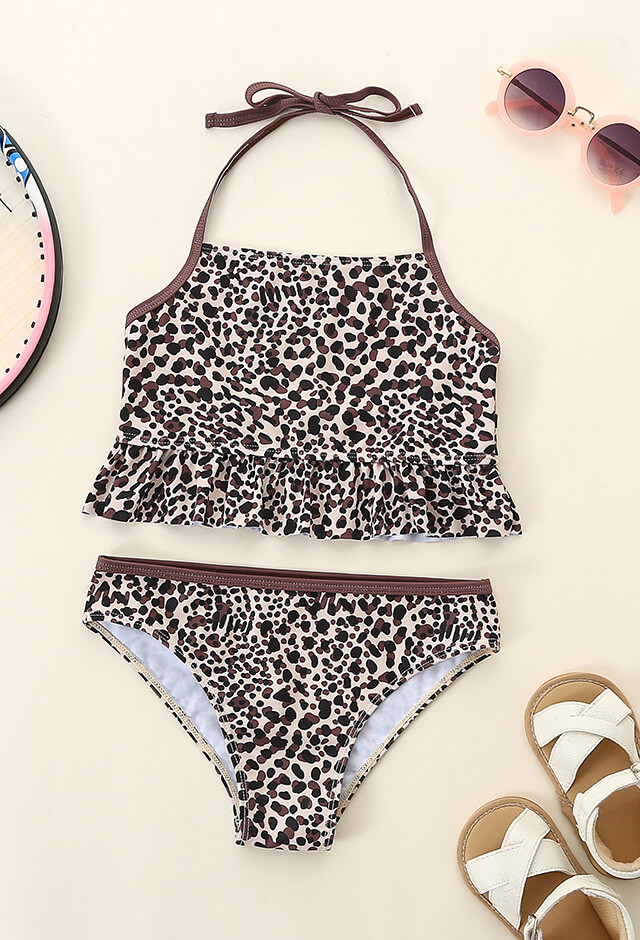 Two-Piece Swimsuits
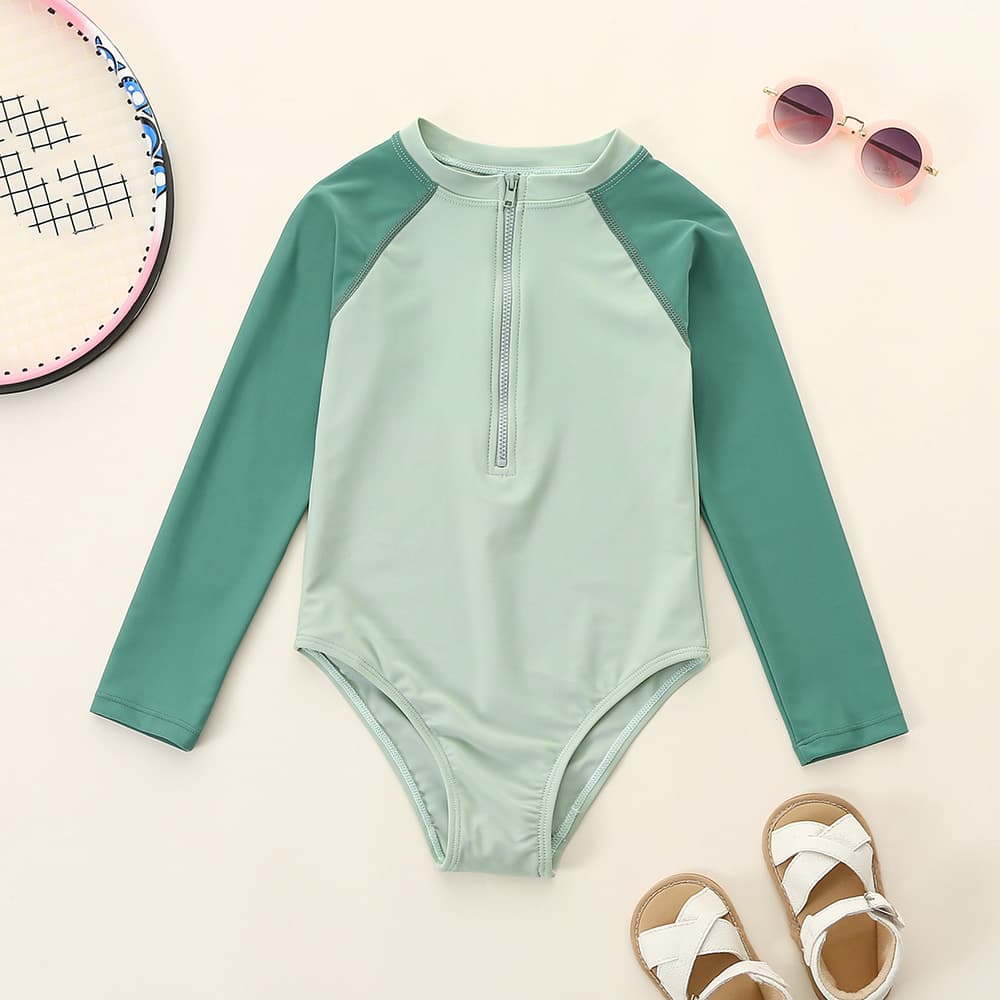 Rash Guards
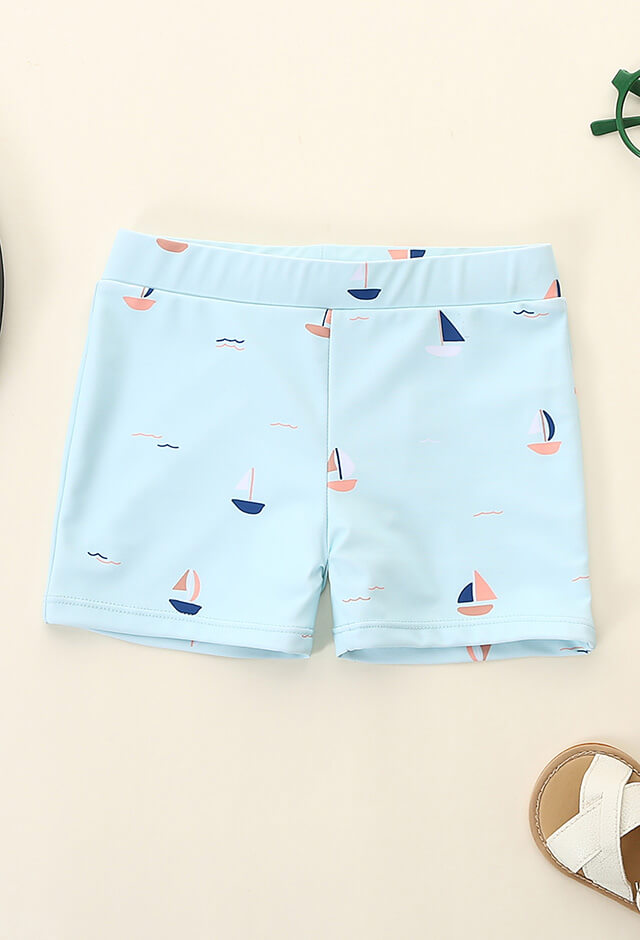 Swim Trunks
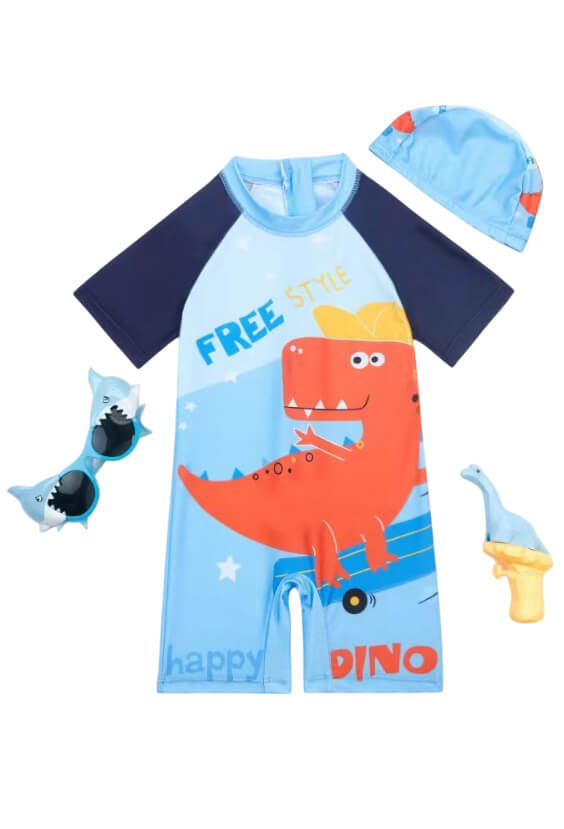 Boy Swimsuits
 Poncho
 Beach Towel
 Sun Hat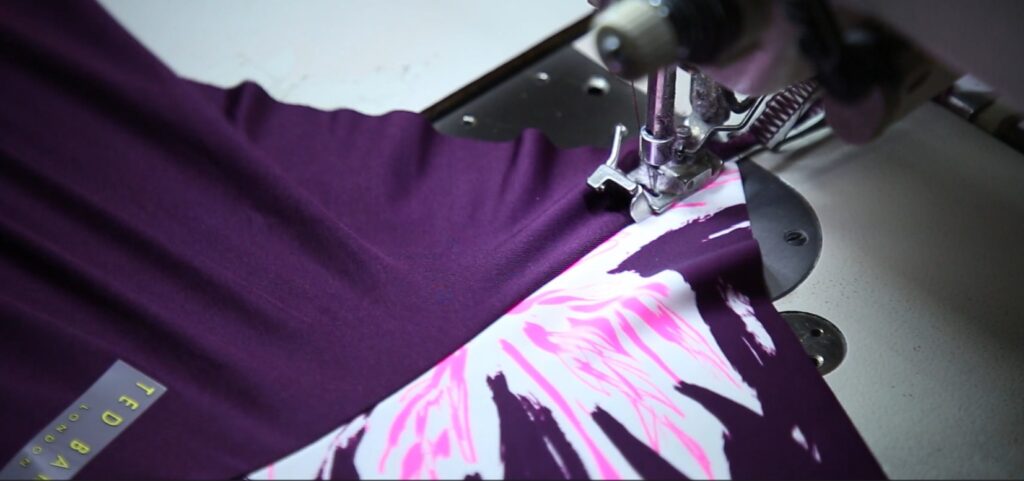
LYCRA vs Spandex in Swimwear
A fabric supplier offers you two swimwear materials.
One is described as nylon spandex. The other is marketed as nylon with LYCRA® fiber.
Both fabrics have the same fiber composition and feel soft to the touch. They also stretch easily when pulled by hand.
But the LYCRA option costs more.
Does that mean it will produce a better swimsuit?
Not necessarily.
The difference between LYCRA vs spandex in swimwear is frequently misunderstood because the terms are used differently in fabric specifications, marketing materials and conversations with manufacturers.
LYCRA® is a trademarked brand of spandex fiber produced by The LYCRA Company. Spandex and elastane are generic names for the same category of elastic textile fiber.
That explains the terminology, but it does not answer the more useful manufacturing questions.
Will the fabric recover after repeated stretching?
Does it resist chlorine?
Will changing the elastic fiber alter the fit?
Is the branded material genuinely supplied through an authorized source?
For swimwear brands developing bikinis, one-piece swimsuits, rash guards or performance collections, these questions matter more than the name printed on a swatch card.
This guide explains what buyers should compare before approving fabric for sampling and bulk production.
LYCRA, Spandex and Elastane: Are They the Same Material?
The three names are closely related, but they are not identical in meaning.
Understanding the terminology

LYCRA®
A trademarked brand of spandex/elastane fiber produced by The LYCRA Company.
Spandex
The generic fiber name commonly used in the United States.

Elastane
Another generic name for spandex, widely used in international textile specifications.
DISTINCTION: LYCRA is a brand name. Spandex and elastane describe the fiber category.
What Is LYCRA Fiber?
LYCRA® fiber is a synthetic elastic fiber developed to provide stretch and recovery when combined with other textile fibers.
It is an ingredient rather than a complete fabric.
In swimwear, it may be combined with nylon or polyester to create a fabric with the desired stretch, fit and surface appearance.
The LYCRA Company supplies different elastic-fiber technologies, including versions developed for specific performance requirements such as chlorine resistance.
However, a fabric containing LYCRA fiber is not automatically suitable for every swimsuit.
The finished construction still determines how the garment behaves.
What Is Spandex?
Spandex is the generic name for a synthetic elastic fiber that enables fabrics to stretch and recover.
When a supplier describes a fabric as:
- Nylon / Spandex
- Polyester / Spandex
- Recycled Nylon / Spandex
the term identifies the elastic component but does not tell you its manufacturer, exact grade or performance characteristics.
Two spandex yarns can have different specifications and perform differently.
For this reason, buyers should not assume that every generic spandex fabric has identical elasticity, recovery or durability.
What Is Elastane?
Elastane refers to the same generic fiber category as spandex.
For example, a supplier might describe a fabric as:
80% Polyamide / 20% Elastane
while another supplier writes:
80% Nylon / 20% Spandex
These specifications use different names for the same generic fiber categories.
The terminology alone does not establish whether the two fabrics have equivalent performance.
The U.S. Federal Trade Commission permits the use of elastane as an alternative fiber name for spandex in relevant textile labeling
LYCRA vs Spandex in Swimwear: A Practical Comparison
The real comparison is not between two unrelated fiber types.
It is between a branded elastic-fiber product and another elastic-fiber product whose manufacturer and grade may vary.
| Factor | LYCRA® Fiber | Generic Spandex |
|---|---|---|
| Fiber category | Spandex / Elastane | Spandex / Elastane |
| Brand identity | Trademarked | Generic |
| Supplier | The LYCRA Company | Various manufacturers |
| Stretch | Depends on fiber grade and fabric construction | Depends on fiber grade and fabric construction |
| Recovery | Depends on the selected technology and finished fabric | Depends on fiber specification and finished fabric |
| Chlorine resistance | Specialized versions are available | Specialized grades may be available; verify specifications |
| Traceability | Branded-fiber verification routes are available | Depends on the supplier |
| Price | Must be quoted for the actual material | Must be quoted for the actual material |
| Branding | Subject to trademark and qualification requirements | Cannot be marketed as LYCRA unless genuine and authorized |
The LYCRA Company offers specialized swimwear technologies and verification services for genuine branded fibers.
However, the table should not be interpreted as evidence that every LYCRA-containing fabric outperforms every generic spandex fabric.
A reliable decision requires comparing finished fabrics with suitable testing.
Why Swimwear Needs More Than Good Stretch
Stretch is easy to demonstrate.
The fabric supplier can pull a swatch in front of a buyer and show how far it extends.
Recovery is harder to judge in a brief demonstration.
A material may stretch comfortably during the first fitting but fail to return to its original dimensions after repeated use.
For a swimsuit, that difference affects the entire product.
Stretch Determines How the Garment Fits
Fabric with insufficient stretch may make the garment feel too tight or cause uncomfortable pulling through the body. Excessive stretch without adequate recovery, on the other hand, can lead to a loose fit during wear.
This means the finished garment is smaller than the relevant body measurements and relies on fabric extension to achieve the intended fit.
The amount of negative ease must be developed for the actual fabric and silhouette.
Consider a fitted one-piece swimsuit.
Its fabric needs to accommodate movement across the torso, bust, waist and hips.
If the fabric stretches less than expected, the garment may feel too tight or pull uncomfortably through the body.
If it stretches excessively without sufficient recovery, the fit may become loose during wear.
That is why two fabrics with identical compositions should not automatically use the same approved pattern.
For a more detailed explanation, see SENVYN’s guide to swimwear pattern making techniques
Recovery Determines Whether the Shape Lasts
Recovery describes the fabric’s ability to return toward its original dimensions after being stretched.
Poor recovery can cause:
- loose bikini bottoms;
- sagging around the seat;
- stretched-out straps;
- loss of support;
- distorted necklines;
- reduced fit consistency.
These problems may not be visible when the first sample is placed on a dress form. The swimsuit needs to be evaluated through movement and repeated stretching.
Buyer tip: When comparing LYCRA-containing fabric with another spandex fabric, request recovery data or conduct a controlled comparison using the same extension, test direction and recovery time.
Pulling both swatches by hand is a preliminary check, not a reliable performance comparison.
Does LYCRA Make Swimwear More Chlorine-Resistant?
Not every LYCRA fiber has the same performance specification.
This is especially relevant for brands designing swimwear intended for frequent pool use.
Chlorine, heat, UV exposure and certain lotions can contribute to degradation of vulnerable elastic fibers. Over time, the material may lose its ability to recover after stretching.
The elastic-fiber grade therefore matters.
The company states that the fiber can last up to 10 times longer than unprotected spandex under its comparative testing conditions. This is a manufacturer-reported performance claim, not a guarantee for every finished swimsuit.
If a collection is intended for regular pool swimming, it is reasonable to investigate this type of specialized fiber.
But the finished garment still needs appropriate testing.
The shell fabric, lining, elastic trims, stitching and finishing all influence durability. A chlorine-resistant elastic fiber does not automatically make every component chlorine-resistant.
Chlorine Resistance and Colorfastness Are Different
Buyers should also distinguish between:
- fiber degradation;
- loss of elastic recovery;
- color fading;
- staining or color transfer.
For example, ISO 105-E03 specifies a method for evaluating textile colorfastness to chlorinated swimming-pool water. It addresses color performance, not the complete durability of the swimsuit’s elastic structure.
A fabric could pass a colorfastness requirement and still have inadequate elastic recovery after prolonged use.
Ask your supplier which property each test report actually measures.
Is Nylon With LYCRA Better Than Nylon With Generic Spandex?
Consider two hypothetical fabric specifications.
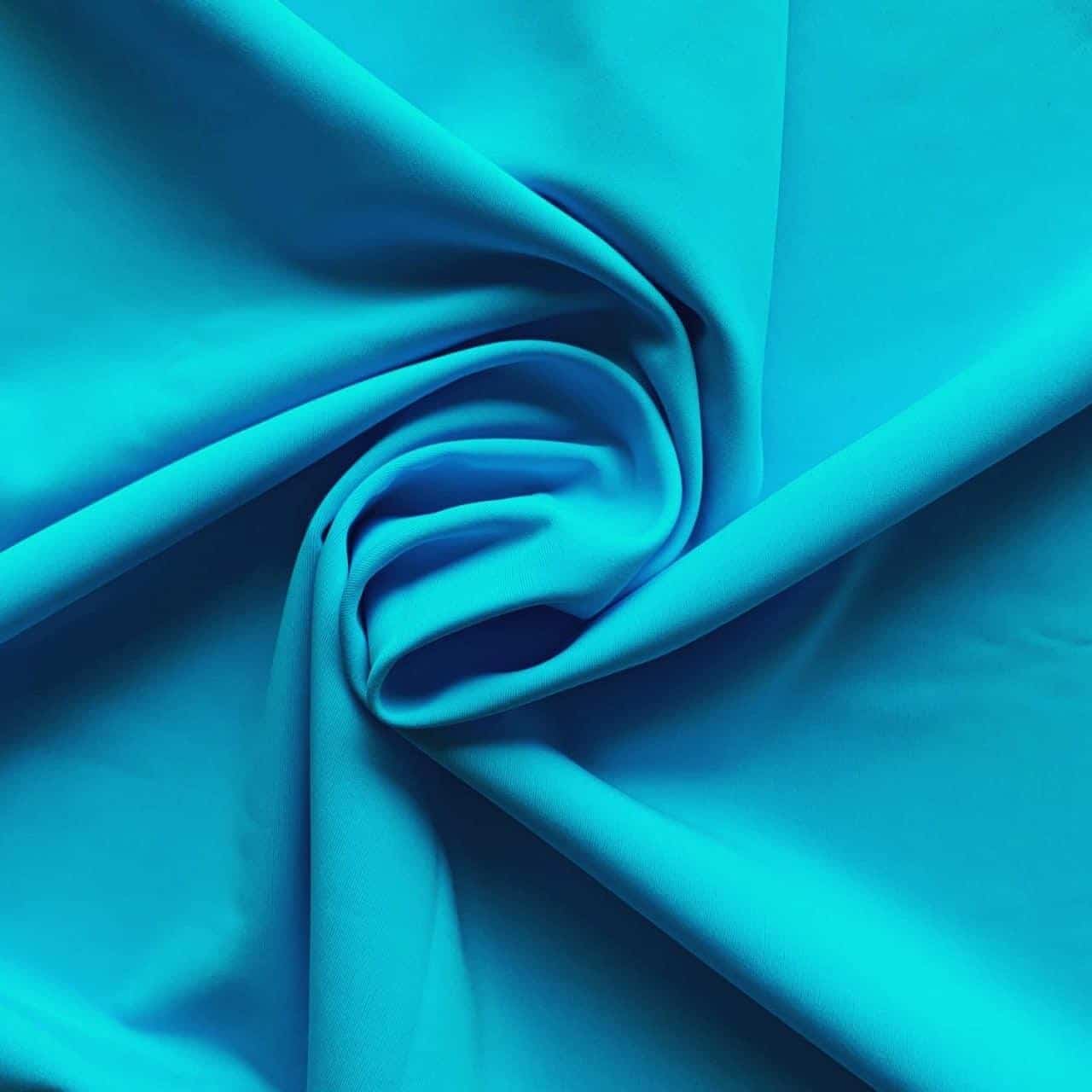
Nylon / Generic Spandex
80% Nylon
20% Spandex
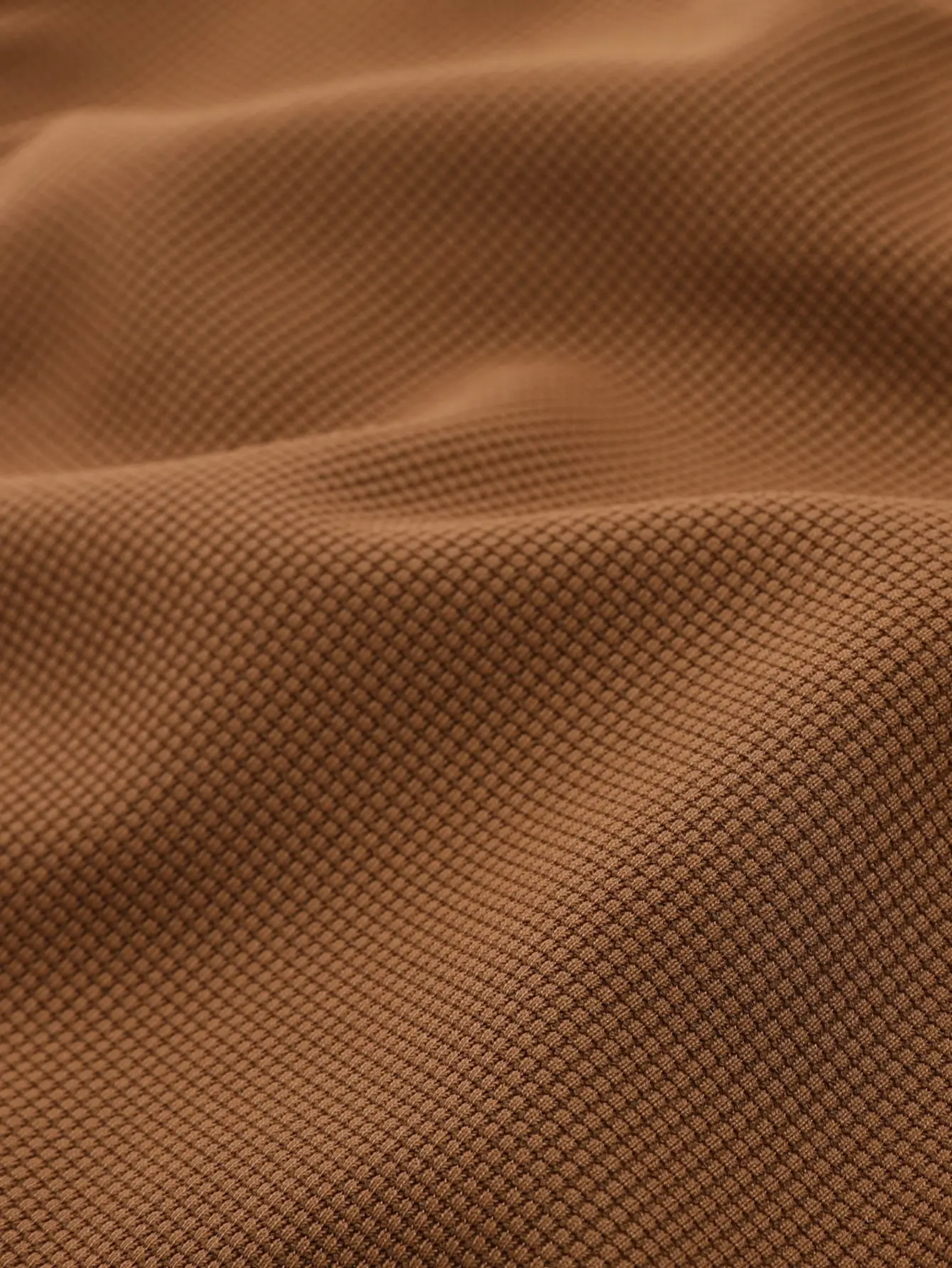
Nylon / LYCRA Fiber
80% Nylon
20% LYCRA® elastane
Illustrative specifications only. They do not represent actual supplier quotations or test results.
Both have the same nominal fiber composition.
Does Fabric B automatically have better recovery?
No.
The result depends on factors such as:
- elastic yarn grade;
- yarn properties;
- knitting structure;
- fabric weight;
- finishing process;
- heat-setting conditions;
- fabric supplier’s quality consistency.
Even if the branded fiber has particular performance characteristics, the final fabric must be evaluated as a complete material.
A poorly developed construction will not become suitable for swimwear simply because it contains a recognized fiber brand.
The Comparison Buyers Should Request
Ask both suppliers for comparable materials.
They should ideally have similar:
- composition;
- GSM;
- width;
- knitting structure;
- intended use;
- surface finish.
Then compare actual samples and test results.
If one fabric is heavier, more tightly knitted or finished differently, you may be comparing two fabric constructions rather than isolating the effect of the elastic fiber.
This distinction is important when deciding whether the additional cost of a branded material is justified for a particular product.
How Much Spandex Does Swimwear Need?
There is no universal elastane percentage suitable for every swimsuit.
The required amount depends on the fabric construction, intended stretch, support and design.
A bikini, a rash guard and a structured one-piece swimsuit may require different materials.The useful principle is to treat composition as a starting specification rather than a performance guarantee.
Higher Spandex Content Does Not Always Mean Better Swimwear
Buyers sometimes assume that increasing elastane automatically improves stretch and quality.
The relationship is not that simple. The type of elastic yarn, knitting structure and finishing process influence how the fabric behaves.
Increasing the elastane percentage can change:
- stretch;
- recovery;
- fabric tension;
- hand feel;
- fabric weight;
- compression;
- manufacturing cost.
It may also require pattern adjustments.
A material that creates comfortable stretch in a triangle bikini may not provide the support needed for a structured swimsuit.
What About 80% Nylon / 20% Spandex?
This is a commonly encountered composition in swimwear sourcing, and it appears among the material examples in SENVYN’s
guide to swimwear fabric options.
However, the composition does not establish:
- exact stretch percentage;
- recovery performance;
- chlorine resistance;
- opacity;
- compression;
- garment fit.
Two 80/20 fabrics can behave differently.
The approved material code and performance specification should always be recorded in the tech pack.
Choosing LYCRA or Spandex for Different Swimwear Products
Material selection should follow the product’s intended use rather than applying one fiber decision to an entire collection.
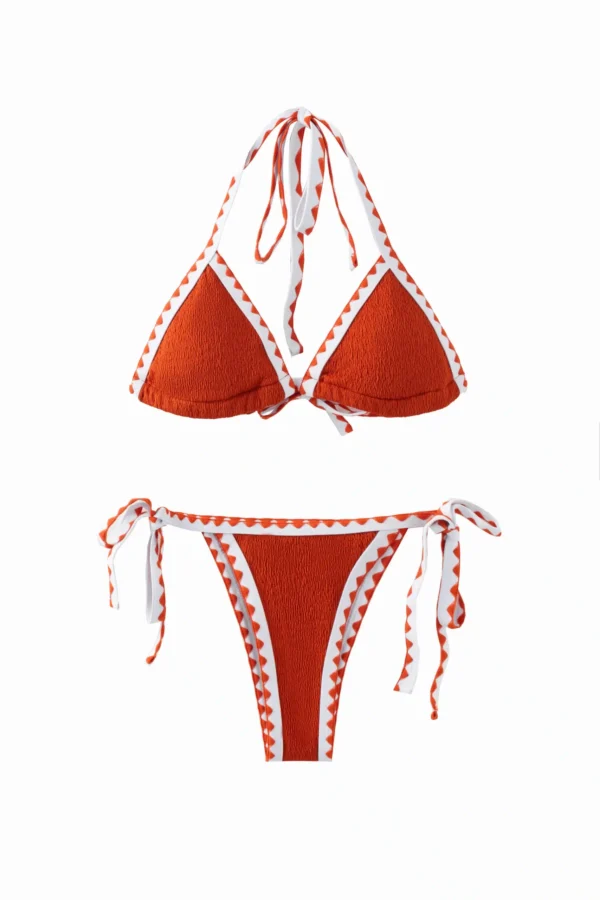
Fashion Bikinis
Smoothness, comfort, coverage and recovery are important. Compare nylon-rich fabrics with suitable elastic fiber grades and evaluate the finished bikini, especially at the leg openings and waist.
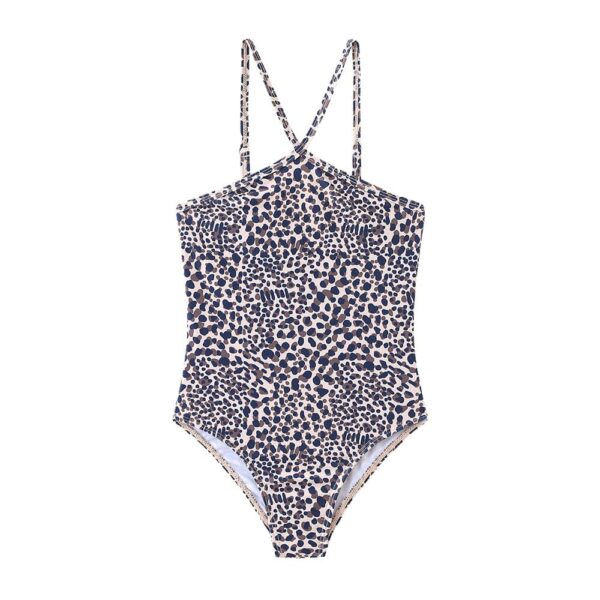
One-Piece Swimsuits
Torso stretch and lengthwise recovery deserve particular attention. The fabric must work with the approved pattern, lining and intended support structure.
Rash Guards
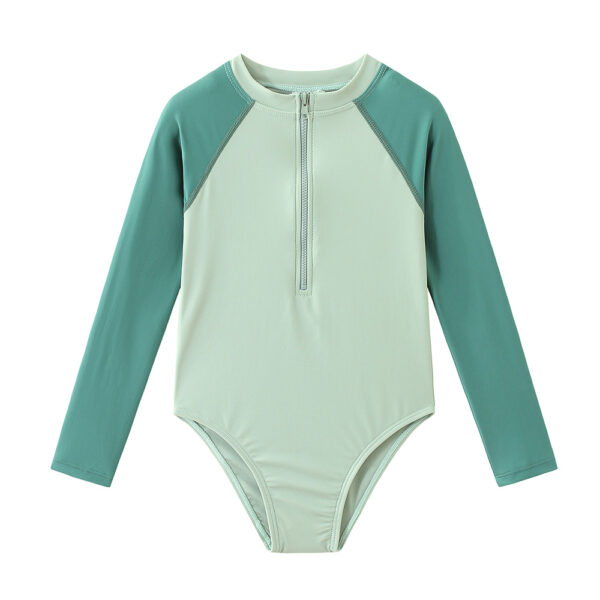
Assess stretch, recovery, abrasion resistance and colorfastness. For fitted rash guards, the sleeve and shoulder areas should be evaluated during movement.
Kids’ Swimwear
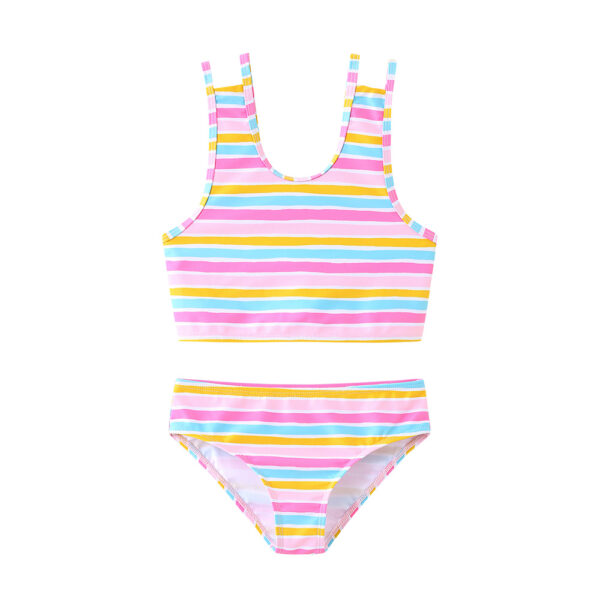
Check comfort, recovery, appropriate fit, colorfastness and applicable product safety requirements. Abrasive seams or overly tight elastic can create problems regardless of fiber branding.
A brand developing several categories should not assume that the same elastic-fiber percentage is appropriate for all of them.
The fabric library may need more than one construction.
Can You Replace LYCRA With Generic Spandex During Production?
Technically, replacing one elastane yarn with another may be possible.
Commercially, it should be treated as a material change requiring evaluation.
This is a common risk when sourcing teams approve one sample and later attempt to reduce costs before bulk production.
Imagine a brand approves a bikini made from a particular nylon fabric containing LYCRA fiber.
The factory subsequently identifies another nylon-spandex fabric at a lower price.
Both have identical composition percentages.
New material still may have different:
- stretch;
- recovery;
- width;
- GSM;
- surface appearance;
- dye behavior;
- cutting behavior.
If the factory changes fabric without adjusting the pattern or obtaining approval, the finished bikini may not match the original sample.
What Should Happen Before Substitution?
First, obtain the alternative material’s specification.
Next, compare it against the approved fabric rather than accepting it based on composition alone.
If the differences could affect garment performance, produce a revised sample.
The brand should then confirm fit, appearance, stretch and recovery before approving the substitution.
A branded upgrade is still a material change.
What Happens When Fabric Stretch Changes but the Pattern Does Not?
Swimwear patterns are developed around specific fabric properties. A one-piece approved with a relatively firm material may fit differently when produced using a softer, more extensible fabric. Similarly, replacing a high-recovery material in bikini bottoms can lead to unwanted stretching or changes in coverage.
A one-piece pattern approved with a relatively firm material may not produce the same fit when made from a softer, more extensible fabric.
Likewise, a bikini bottom developed for a high-recovery material can behave differently when its replacement fabric has greater residual extension.
Possible problems include:
- excessive looseness;
- uncomfortable tightness;
- shifting garment position;
- uneven tension around openings;
- distorted seams;
- changes in coverage.
These are not necessarily sewing defects.
Sometimes the problem originates from the decision to use a different fabric without revisiting the pattern.
For brands working with a custom swimwear manufacturer, a practical approach is to finalize the target fabric early enough that pattern development and fitting can be based on the material intended for bulk production.
If the fabric changes later, reassess the sample.
How LYCRA and Spandex Affect Swimwear Manufacturing
Fabric behavior influences more than fitting.
It also affects cutting, sewing and production consistency.
Cutting High-Stretch Fabrics
Stretch fabrics need controlled handling during cutting.
Excessive tension can distort the fabric.
Once released, the cut pieces may recover toward their original dimensions, creating differences from the intended pattern shape.
Factories should also control:
- fabric relaxation where required;
- grain and cutting direction;
- layer movement;
- cutting accuracy;
- fabric defects.
Changing to a material with different stretch characteristics may require adjustments to the cutting process.
Sewing and Seam Performance
The sewing method must accommodate the garment’s required extension.
If the seam cannot stretch sufficiently, stitches may break when the wearer puts on the swimsuit.
Excessive fabric tension during sewing may also create puckering or distortion.
A suitable evaluation includes checking seam extension, stitching appearance and garment recovery after stretching.
The relationship between fabric selection, pattern development, cutting, sewing and pre-production approval is covered in SENVYN’s swimwear manufacturing process.
The fiber name alone does not determine the correct sewing settings.
Don’t Confuse Spandex Recovery With Elastic Trim Performance
An important distinction in swimwear production is the difference between elastane inside the fabric and the separate elastic components sewn into the garment.
One bikini may contain:
- nylon-spandex shell fabric;
- stretch lining;
- elastic at the leg openings;
- elastic inside the waistband;
- elastic in the underbust area;
- adjustable shoulder straps.
These components have different jobs.
Even if the shell fabric recovers well, the garment can lose its fit if the elastic trim deteriorates or was applied with incorrect tension.
Example: A Bikini Bottom Becomes Loose
The buyer notices that the leg openings no longer fit properly.
It would be premature to blame the spandex fiber.
The problem could involve:
- inadequate shell-fabric recovery;
- lining behavior;
- elastic deterioration;
- incorrect elastic length;
- excessive tension during sewing;
- pattern dimensions.
A factory should identify the actual cause before changing materials.
Replacing the shell with a more expensive LYCRA-containing fabric will not solve a problem caused by incorrect elastic application.
LYCRA vs Spandex: What Should Buyers Compare During Sampling?
Fabric specifications are necessary, but they cannot replace a physical garment sample.
For accurate evaluation, the buyer should compare materials under equivalent conditions.
Step 1: Obtain the Complete Fabric Specification
Request:
- supplier and fabric code;
- exact fiber composition;
- fiber brand and grade, if applicable;
- GSM;
- usable width;
- knitting construction;
- stretch and recovery data;
- finishing information;
- available colors;
- MOQ;
- relevant test reports.
For a branded material, request appropriate authenticity information as well.
Step 2: Compare the Swatches
Examine the fabrics in the same lighting.
Check surface appearance, softness, thickness, stretch direction and recovery.
If a swatch shows visible bagging or residual deformation after stretching, investigate before ordering sample yardage.
Step 3: Develop Garment Samples
Produce the same style using each candidate material.
For a meaningful comparison, keep other construction details consistent wherever possible.
Use the intended lining, elastic and stitching.
Step 4: Evaluate Fit and Movement
Check the swimsuit on the intended fit model or appropriately sized form.
Include:
- standing fit;
- bending;
- arm movement;
- extension across the torso;
- stretch around waist and leg openings;
- garment recovery after movement.
A sample that looks excellent in a static photograph may not function properly in use.
Step 5: Review Wet Performance
Evaluate the garment under relevant wet conditions.
Check opacity, lining visibility, shape and recovery.
Light colors deserve particular attention.
A fabric may appear opaque when dry but reveal the lining or become more transparent after it is stretched and wet.
Step 6: Confirm the Pre-Production Sample
Once the material is selected, use it in the pre-production sample.
Record the final material details and obtain approval before cutting bulk fabric.
The approved sample should be a reference for bulk manufacturing, not merely a photograph of the design.
Swimwear Quality Control: Which Tests Actually Matter?
Using genuine LYCRA fiber or selecting a particular generic spandex grade does not eliminate the need for quality control.
The finished fabric must be suitable for its intended use.
Inswimwear quality control, the first inspection stage should address material quality before the fabric is released for cutting.
A practical test and inspection plan may include the following.
| Test or Check | What It Helps Identify |
|---|---|
| Fiber composition | Whether the material matches the specified blend |
| GSM | Weight variation between approved and delivered material |
| Stretch | Extension in the required directions |
| Recovery | Residual deformation after stretching |
| Dimensional stability | Changes after washing or other specified treatment |
| Chlorinated-water colorfastness | Color change under specified pool-water test conditions |
| Chlorine-related durability | Changes in strength or elastic performance under a defined protocol |
| Wet opacity | Coverage problems when wet and stretched |
| Seam extension | Whether stitching accommodates garment movement |
| Appearance inspection | Surface defects, shade differences and other visible issues |
Do not accept the statement “chlorine tested” without asking what was tested.
A colorfastness report does not necessarily demonstrate elastic-fiber durability.
Similarly, a stretch result does not automatically establish recovery.
Buyers should agree on the relevant test methods and acceptance requirements before testing begins.
Why Bulk Fabric Needs a Second Check
A successful sample proves that the sampled material and construction can work.
It does not guarantee that a later fabric delivery is identical.
Before cutting bulk production, compare the delivered fabric against the approved specification.
Particular attention should be given to:
- weight;
- width;
- color;
- appearance;
- stretch;
- recovery;
- batch consistency.
If the fabric differs materially from the approved sample, investigate before cutting.
Once hundreds of panels have been cut, correcting a fabric problem becomes much more expensive.
Is LYCRA Fabric More Expensive Than Generic Spandex Fabric?
A branded-fiber fabric may carry a different price, but there is no universal price difference that applies to every supplier or material.
The quotation depends on the complete fabric.
- Costs may involve:
- yarn grade;
- nylon or polyester base;
- fabric construction;
- weight;
- knitting requirements;
- dyeing;
- finishing;
- certification or verification;
- order quantity;
- stock availability.
A buyer should request quotations against the same specification.
Otherwise, a cheaper fabric might simply be lighter or use a different construction.
Compare Total Garment Cost, Not Only Fabric Price
The material quotation is only one part of the decision.
Also consider:
- cutting yield;
- fabric defects;
- sample revisions;
- sewing behavior;
- quality requirements;
- potential material waste;
- expected reorder consistency.
For a structured one-piece swimsuit, even a small change in fabric performance may require additional pattern and fit work.
The lowest fabric quotation is not necessarily the lowest-cost development route.
How Can Buyers Verify That a Fabric Contains Genuine LYCRA?
A fabric quotation that says “Lycra quality” or “Lycra type” does not establish that genuine branded fiber is used.
The LYCRA Company has procedures for brand licensing, approved fabrics and garment verification. It states that fabric qualification is required for its branded promotional programs and that garment letters can provide evidence concerning genuine branded fibers.
If branded fiber is part of your product specification, request supporting information from the supplier.
Useful details include:
- exact LYCRA fiber product or technology;
- fabric mill;
- approved fabric information;
- relevant authenticity documentation;
- confirmation of whether branded hangtags are permitted;
- consistency between the approved sample and bulk fabric.
A supplier’s verbal assurance should not be the only basis for a branded-material claim.
Can Any Swimsuit Use a LYCRA Hangtag?
No.
LYCRA Company sets qualification requirements for branded hangtags, including requirements concerning the stretch fabrics used in the garment.
Brands should confirm eligibility and the applicable licensing process before printing packaging or ordering customized hangtags.
They also publishes requirements for using its trademarks and logos.
Do not assume that a supplier’s generic spandex fabric can be advertised as LYCRA simply because the fibers perform similar functions.
What Should You Write on the Swimwear Composition Label?
Fiber-content labeling and marketing claims are separate matters.
For the United States, the FTC requires applicable textile products to disclose fiber content using recognized generic names, subject to its labeling rules.
A genuine fiber trademark may appear alongside the generic name, but it does not simply replace the required generic fiber identification.
For example, the FTC provides guidance permitting a trademark to appear alongside the generic designation.
A brand developing international packaging should review the rules of its actual destination markets.
The factory needs the final approved composition and labeling artwork before bulk labeling begins.
If LYCRA branding is included, ensure the material is genuine and the intended trademark use is authorized.
Do not finalize a branded care label before the actual fabric has been confirmed.
What About Recycled Fabrics Containing LYCRA or Spandex?
The elastic component also matters when developing a sustainability-focused collection.
A fabric might contain recycled nylon or recycled polyester combined with elastane.
That does not automatically mean the entire fabric is recycled.
For example, if the recycled content comes from the nylon portion, the buyer must distinguish between recycled nylon content and total recycled content.
The specific fiber composition and supporting documentation determine which claims are appropriate.
Mixed-fiber fabrics also create challenges for end-of-life recycling. The LYCRA Company acknowledges these difficulties and reports that elastane recycling technologies are still developing.
For additional material sourcing guidance, brands can compare swimwear fabric options before selecting a recycled base and elastic-fiber combination.
A sustainability claim should reflect the actual material, not simply its most marketable ingredient.
FAQ
Is LYCRA Better Than Spandex for Swimwear?
LYCRA is a branded form of spandex, so the comparison depends on the specific products being evaluated.
Different fiber grades and fabric constructions can have different stretch, recovery and durability characteristics.
For a reliable decision, compare the actual fabrics and relevant test results rather than assuming performance from the name alone.
Is LYCRA the Same as Elastane?
LYCRA is a trademarked brand of elastane fiber.
Elastane and spandex are generic names for the same fiber category.
Is Nylon Spandex the Same as Nylon LYCRA?
Both descriptions can refer to nylon fabric blended with an elastic fiber.
However, nylon LYCRA specifically indicates the use of branded fiber.
Nylon spandex does not establish the identity of the elastic-fiber manufacturer.
Even with identical compositions, the finished fabrics may differ in construction and performance.
Does LYCRA Make a Swimsuit Last Longer?
Durability depends on the specific LYCRA technology and the complete garment construction.
Certain products, such as LYCRA XTRA LIFE fiber, are developed for increased resistance to conditions that damage conventional spandex. However, individual swimsuit durability still requires appropriate material and garment evaluation.
What Is the Best Spandex Percentage for Swimwear?
There is no universal percentage.
The correct composition depends on the fabric construction, required support, stretch, recovery and garment design.
A buyer should evaluate the finished fabric and sample rather than selecting a material only by elastane percentage.
Can a Swimwear Brand Print LYCRA on Its Product Label?
Only genuine branded material should be described as LYCRA.
Brands must also follow the applicable fiber-labeling rules and The LYCRA Company’s trademark and qualification requirements.
A generic spandex fabric cannot be marketed as genuine LYCRA simply because it has similar stretch.