
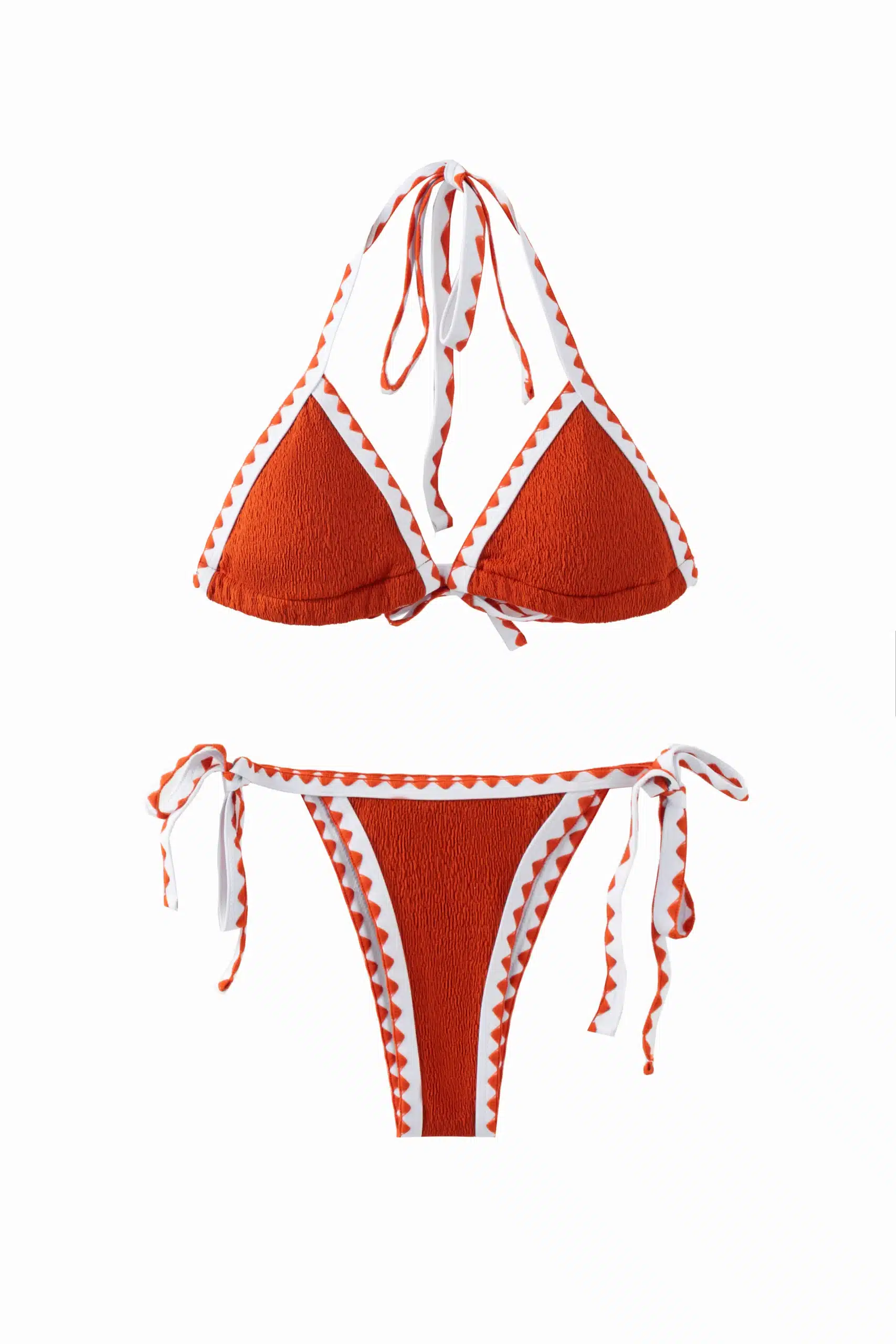
 Bikini
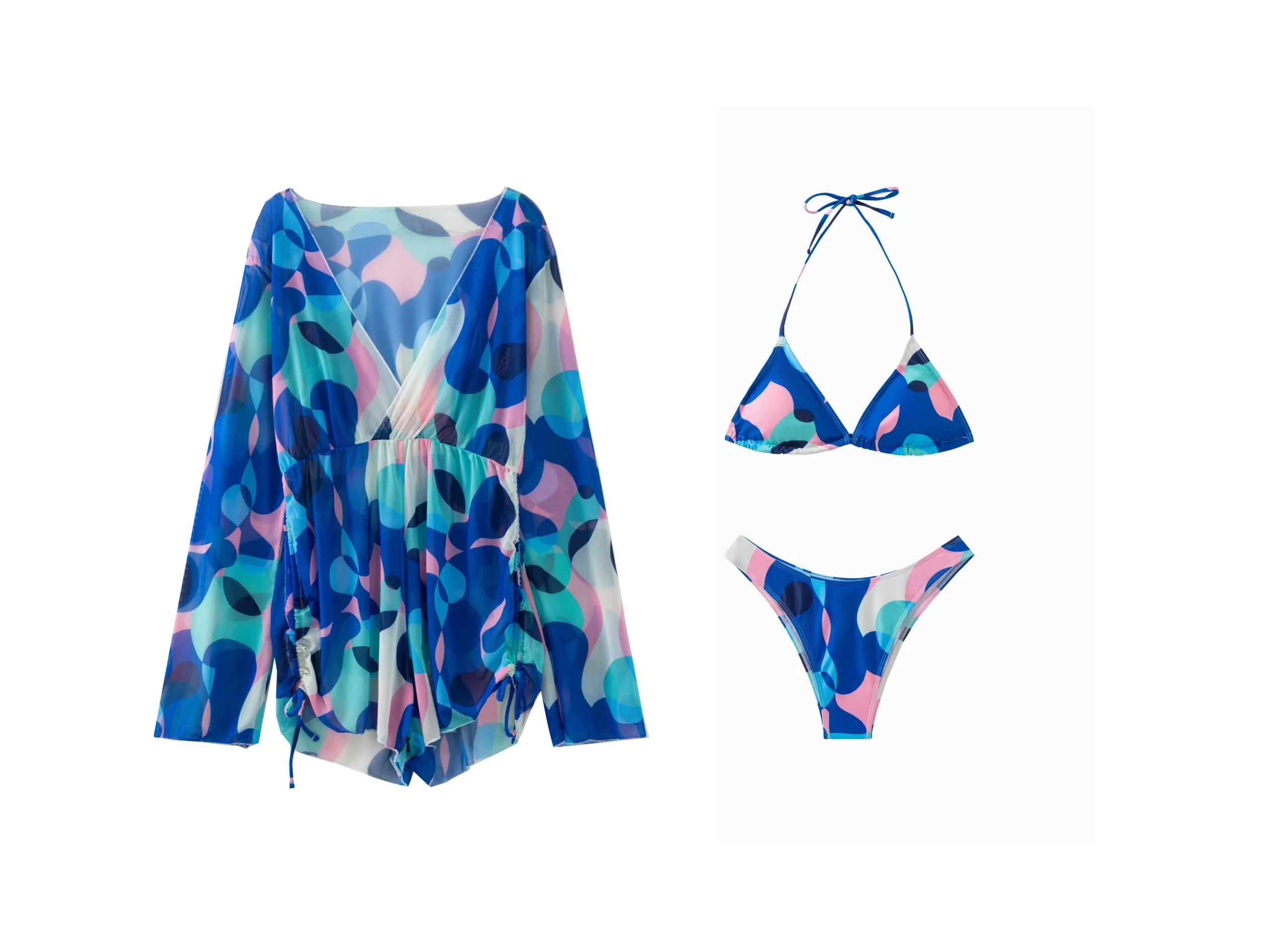 Bikini Cover-Up Set
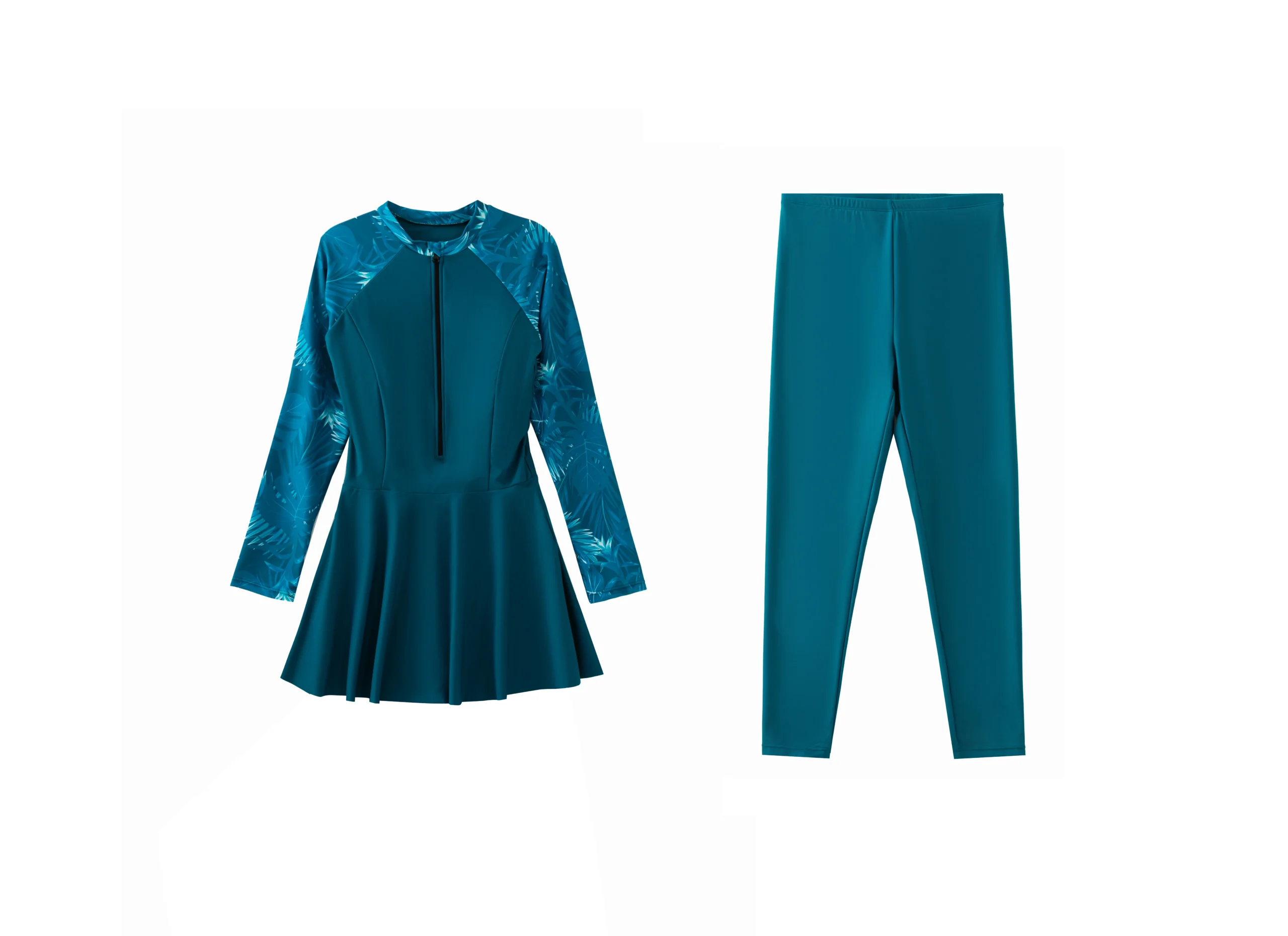 Burkini Swimwear
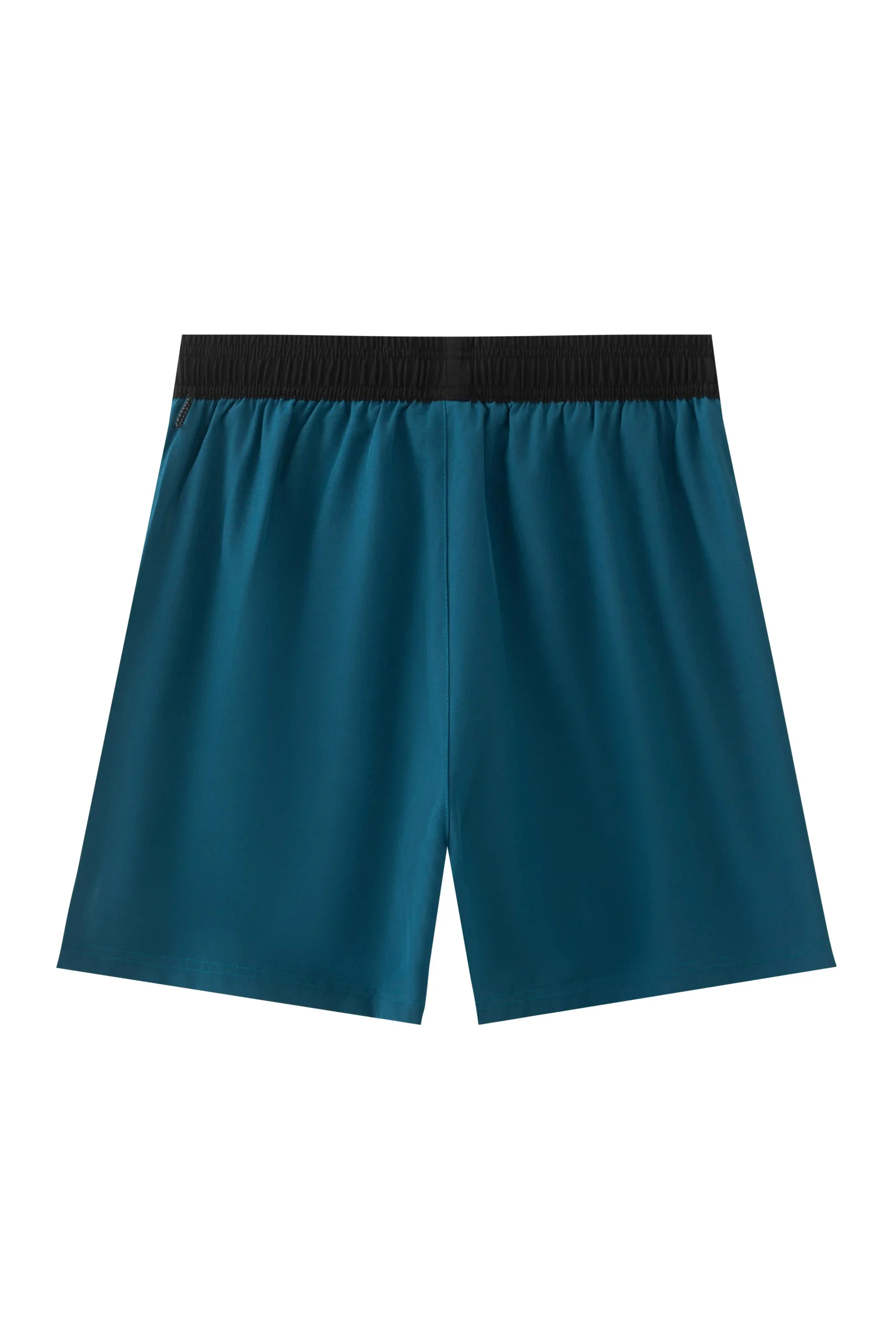 Men Swimwear
 One-Piece Swimsuits
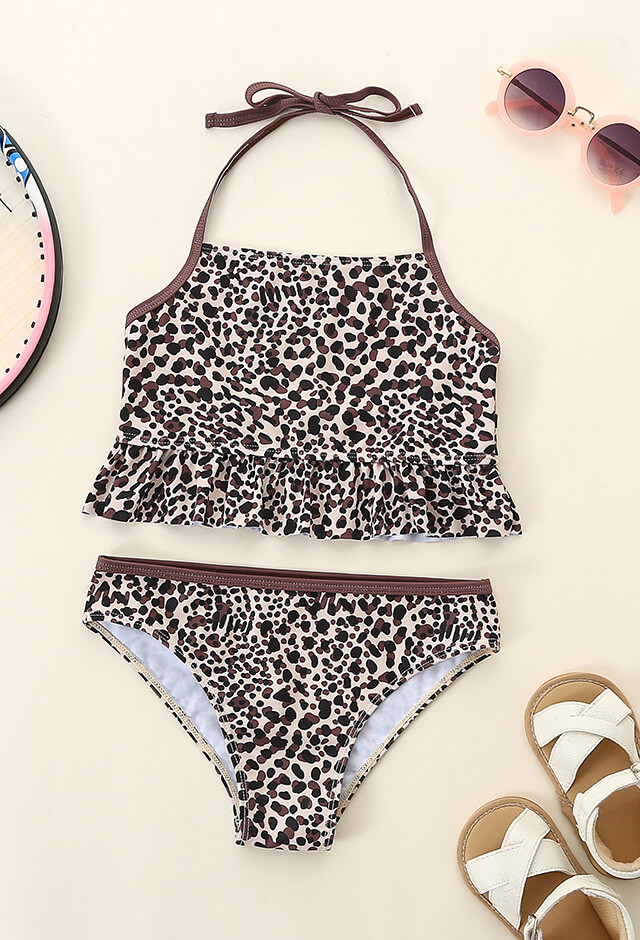 Two-Piece Swimsuits
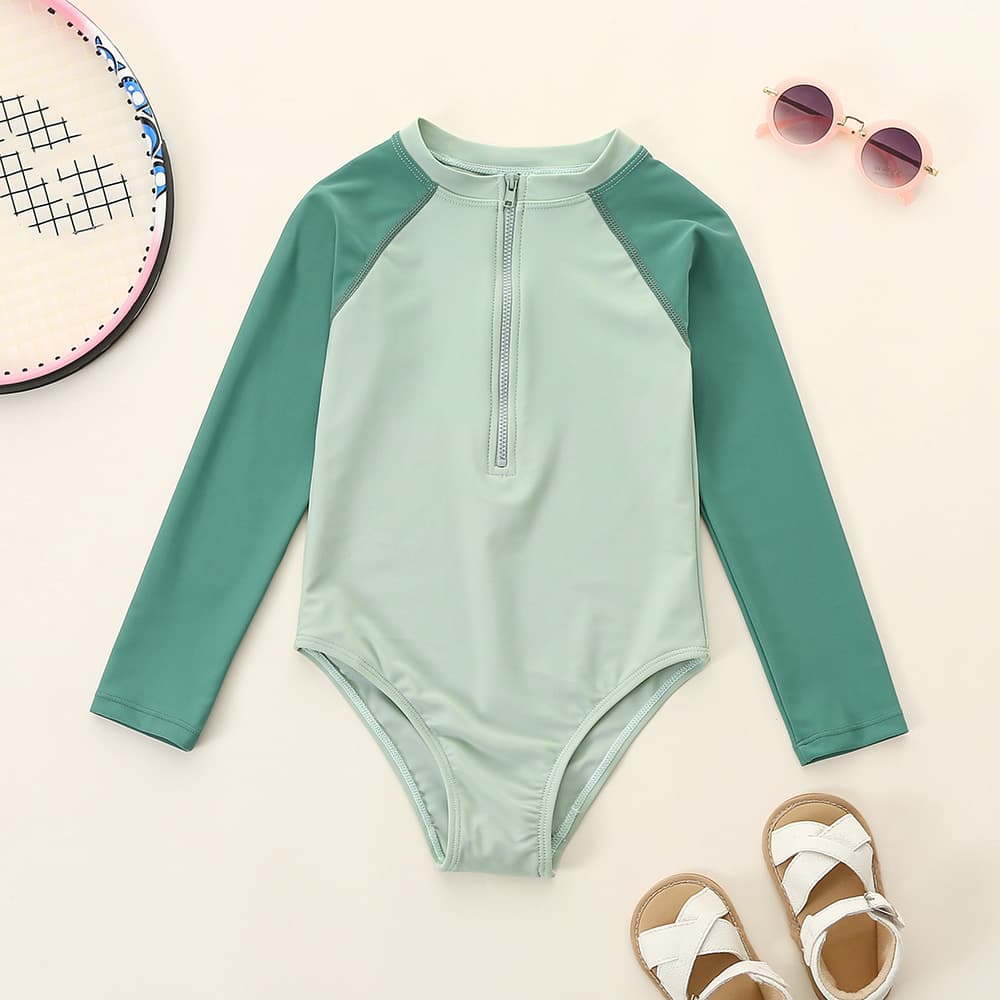 Rash Guards
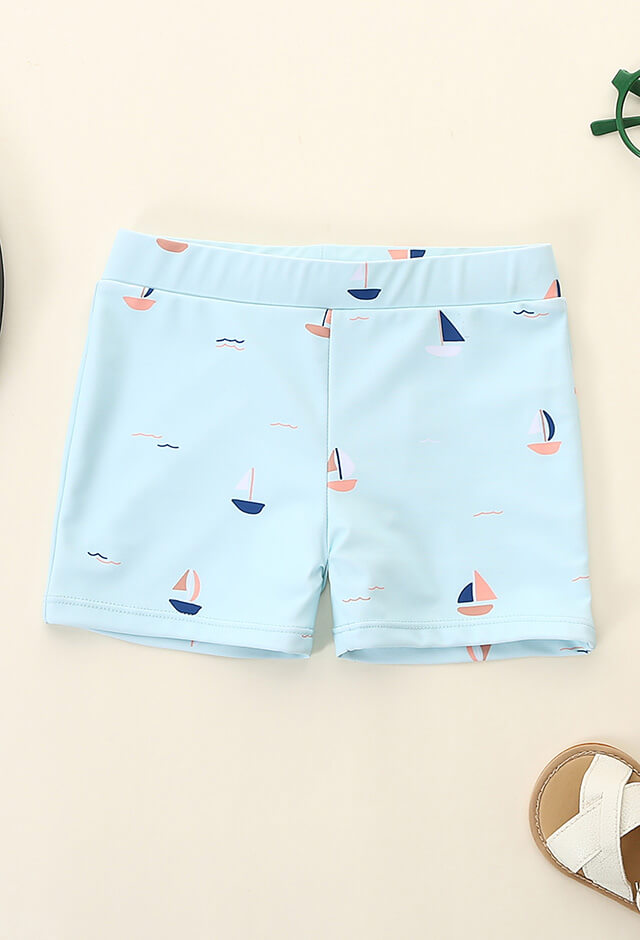 Swim Trunks
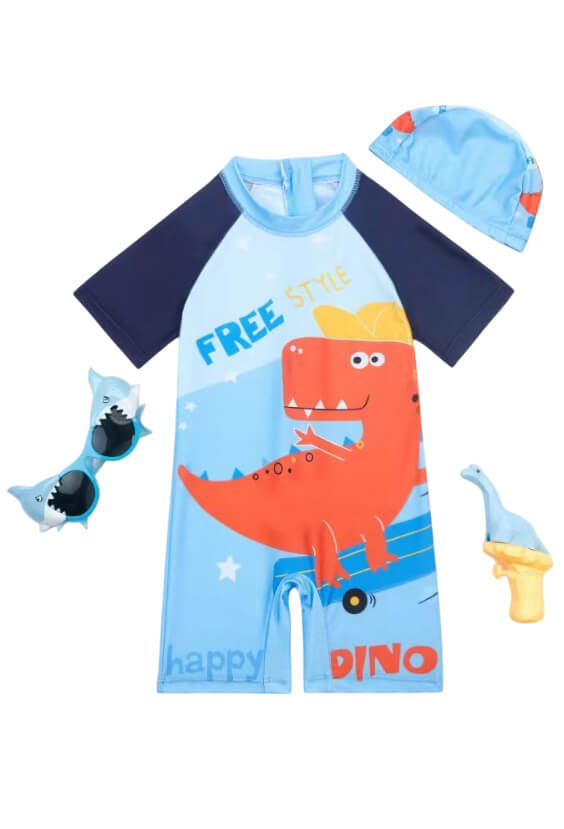 Boy Swimsuits
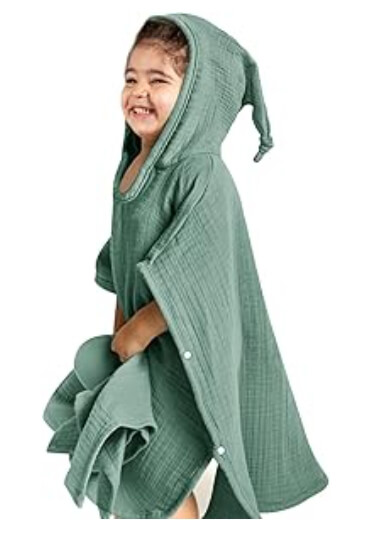 Poncho
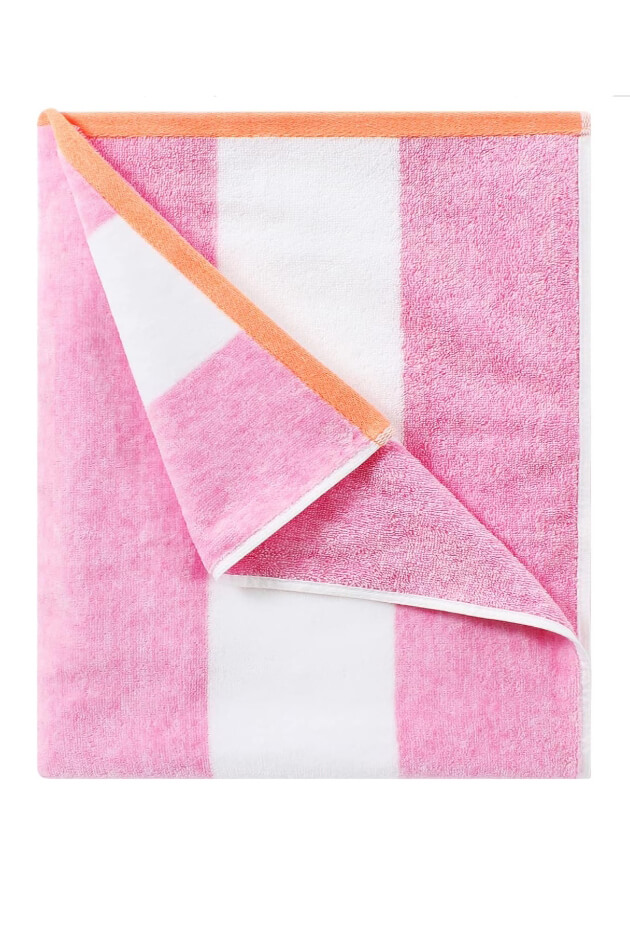 Beach Towel
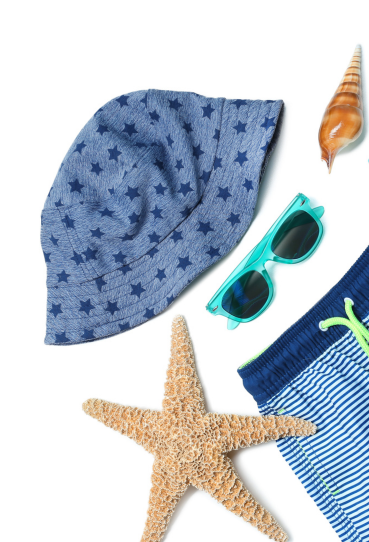 Sun Hat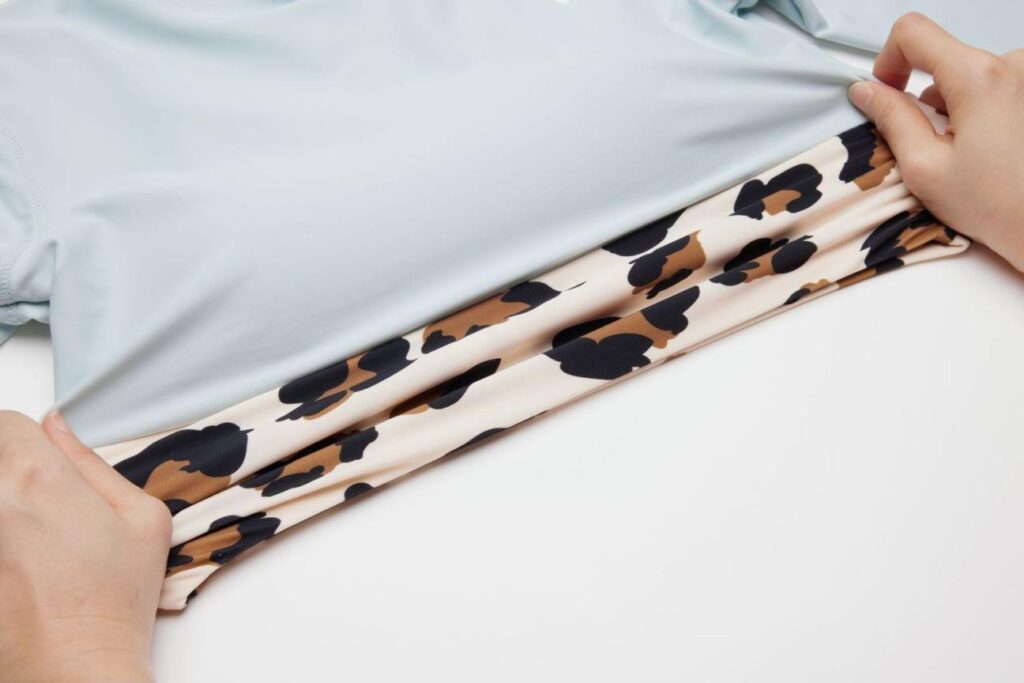
Sustainable Swimwear Fabrics Options
A fabric can sound sustainable on a supplier’s specification sheet and still be the wrong material for a swimsuit.
That is the first thing swimwear buyers should keep in mind.
For sustainable swimwear fabrics, recycled content is only one part of the decision. The fabric still has to recover after stretch, remain sufficiently opaque when wet, hold its color, work with the intended print method, survive repeated use, and behave consistently once the factory starts cutting and sewing bulk production.
There is another sourcing issue: terms such as “recycled,” “eco-friendly,” “regenerated” and “bio-based” do not all mean the same thing.
A recycled nylon fabric may contain regenerated nylon plus virgin elastane. A recycled polyester fabric may use certified recycled yarn but conventional dyes and finishes. A bio-based polyamide can reduce dependence on fossil feedstocks without being a recycled material at all.
For a swimwear brand, the useful question is therefore not simply:
“Which fabric is the most sustainable?”
A better question is:
“Which lower-impact material can meet the performance, design, sourcing and traceability requirements of this particular collection?”
That question leads to much better fabric decisions.
What Does “Sustainable Swimwear Fabric” Actually Mean?
There is no single fiber that automatically makes a swimsuit sustainable.
In practical sourcing, the term may refer to several different things:
- recycled raw materials;
- regenerated synthetic fibers;
- renewable or bio-based feedstocks;
- reduced-impact dyeing or finishing processes;
- traceable material supply chains;
- safer chemical management;
- fabrics designed for greater durability;
- using existing stock rather than developing unnecessary new materials.
These approaches solve different problems.
For example, recycled content addresses raw-material sourcing. Chemical-management systems deal with what happens during textile processing. Durability affects how long the finished swimsuit remains usable.
They should not be treated as interchangeable claims.
This distinction becomes particularly important when your brand intends to make sustainability statements on a product page, hangtag or packaging.
A supplier saying “this is recycled fabric” is useful information, but it is not enough to establish exactly what percentage is recycled, where the recycled material came from, or whether the supply chain can support the claim.
The Main Sustainable Swimwear Fabric Options
For commercial swimwear development, most alternatives still need to deliver properties associated with synthetic performance fabrics: stretch, recovery, low water absorption, dimensional stability and resistance to repeated use.
That narrows the realistic options.
1. Recycled Nylon Swimwear Fabric
Recycled nylon is widely used for fashion swimwear because it can provide the smooth surface and soft hand associated with conventional nylon constructions.
One well-known example is ECONYL® regenerated nylon. Aquafil describes ECONYL as regenerated polyamide 6 made entirely from nylon waste and produced through a chemical regeneration process. It is supplied as a raw-material ingredient rather than as one universal finished swimwear fabric.
That distinction matters.
Buying a fabric containing ECONYL yarn does not tell you everything about the finished material.
You still need to know:
- total fabric composition;
- percentage of regenerated nylon;
- elastane percentage;
- fabric weight;
- knitting structure;
- stretch direction;
- recovery;
- finishing;
- dye method;
- certification or traceability documents available for your order.
A typical stretch swimwear construction combines polyamide with elastane. The exact blend varies by fabric.
Where recycled nylon works well
It is worth considering for:
premium bikini collections;
fashion one-piece swimsuits;
smooth matte or slightly lustrous fabrics;
high-stretch fitted silhouettes;
collections where hand feel is an important part of the positioning.
The material itself, however, should never be approved from composition alone.
A recycled nylon fabric with poor recovery is still a poor swimwear fabric.
If a bikini bottom becomes loose after repeated stretching, the fact that the nylon portion is recycled does not solve the product problem.
What the buyer should check
Ask your supplier for an actual swatch and, where possible, sample yardage.
Then check:
- stretch in both directions;
- recovery after repeated extension;
- surface appearance after rubbing;
- wet opacity;
- color behavior;
- compatibility with lining;
- suitability for your intended printing or dyeing method.
For pale colors, white and very light pastel shades, wet opacity deserves particular attention.
The shell fabric may look perfectly acceptable on a fabric card but become noticeably more transparent when stretched and wet.
2. Recycled Polyester / rPET Swimwear Fabric
Recycled polyester is another major option for brands looking for a recycled swimwear fabric.
Depending on the yarn source, recycled polyester can be produced from post-consumer plastic or textile waste. REPREVE®, for example, produces traceable recycled polyester from sources that include post-consumer plastic bottles and polyester textile waste.
As with branded recycled nylon, REPREVE is a fiber platform rather than a finished swimsuit specification.
The mill still determines the knitting construction, elastane blend, GSM, finish and resulting performance.
Why brands choose recycled polyester
Polyester-based fabrics are useful where the collection relies heavily on:
- printed swimwear;
- bright graphic patterns;
- rash guards;
- surf-inspired products;
- kids’ swimwear;
- performance-oriented styles.
Polyester also works well with sublimation printing, which can make it practical for collections with multiple all-over prints.
But there is a sourcing trade-off.
The hand feel may differ from the soft, smooth character a brand expects from certain nylon fabrics. Modern recycled polyester fabrics can feel very refined, but buyers should evaluate the actual fabric rather than deciding from the fiber name.
A practical print-development issue
Suppose your collection contains:
- two solid-color bikini styles;
- three tropical-print bikinis;
- one printed rash guard.
Using one material for everything may look simpler on the BOM, but it may not produce the best result.
A nylon-rich fabric might give the solids the hand feel you want, while a polyester construction may be better suited to the printed group.
Trying to force the entire collection onto one “sustainable” base fabric purely for marketing consistency can create unnecessary production compromises.
Recycled Nylon vs. Recycled Polyester
There is no automatic winner.
The choice should follow the product.
| Consideration | Recycled Nylon | Recycled Polyester |
|---|---|---|
| Typical hand feel | Often soft and smooth | Varies from smooth to more structured |
| Fashion bikinis | Very common choice | Suitable depending on construction |
| One-piece swimwear | Suitable | Suitable |
| Printed collections | Possible, print method must be confirmed | Particularly practical for sublimation |
| Rash guards | Possible | Common option |
| Bright all-over graphics | Depends on printing system | Often strong option |
| Premium smooth finish | Strong potential | Depends heavily on fabric construction |
| Main sourcing check | Recovery, color, traceability | Hand feel, printing, recovery, traceability |
The table is only a starting point.
Two fabrics with identical fiber percentages can perform very differently because the yarn, knitting structure, elastane, weight and finishing are different.
Never approve a swimwear fabric from its fiber composition alone.
3. Bio-Based Polyamide
Bio-based synthetics are another category worth understanding.
Unlike recycled fibers, these materials use renewable biological feedstocks to replace some or all conventional fossil-derived raw materials.
For example, Fulgar positions EVO® as a bio-based polyamide yarn produced from renewable feedstocks including castor-derived material and industrial corn, and lists swimwear among its applications.
This can be interesting for brands that want to reduce dependence on conventional fossil-derived synthetics but do not want to rely exclusively on recycled materials.
However:
bio-based does not mean biodegradable, and bio-based does not mean recycled.
Those are separate material claims.
A buyer should still ask:
- What percentage is bio-based?
- How is the claim verified?
- What is the finished fabric composition?
- Is elastane still required?
- What certification or documentation supports the claim?
- Can the supplier maintain the same material for future repeat orders?
The last question is particularly important for private-label programs.
An innovative fabric is not very useful commercially if you cannot source it again when a successful style needs to be reordered six months later.
4. Deadstock and Existing Stock Fabrics
Not every lower-impact sourcing decision requires a branded recycled yarn.
Using existing fabric inventory can sometimes be practical for small collections.
A factory or fabric supplier may already have usable stock left from an existing dye lot or previous development.
This can reduce the need to initiate another custom material run.
There is an obvious limitation:
reorderability.
If you use 120 meters of existing stock for a launch and the style becomes a bestseller, the exact material may no longer exist.
Before approving deadstock, ask:
- How many meters are actually available?
- Are all rolls from the same dye lot?
- Can the fabric be reproduced?
- If reproduced, will the color and hand feel remain the same?
- Is documentation available for the fiber-content or environmental claims you want to make?
Deadstock can make sense for capsule collections.
It is much less attractive for a core style you expect to reorder for several seasons.
Why Natural Fibers Rarely Replace Performance Swimwear Fabrics Directly
Buyers sometimes ask whether cotton, linen or other natural fibers can replace synthetic fibers in swimwear.
For cover-ups, beachwear and certain lifestyle garments, absolutely.
For the main body of a fitted swimsuit, the situation is different.
Swimwear needs to handle:
- repeated stretching;
- water;
- close body fit;
- shape recovery;
- quick drying;
- lining;
- elastic insertion;
- movement during wear.
A fiber that looks environmentally attractive on paper may not perform appropriately once turned into a fitted bikini or one-piece swimsuit.
This is why sustainability decisions in swimwear usually involve improving synthetic material sourcing rather than simply removing synthetic fibers altogether.
Do Not Compare Sustainable Swimwear Fabrics by Fiber Name Alone
A sourcing manager comparing two fabrics should request a proper specification rather than asking only:
Is this recycled nylon?
A better comparison includes the following.
Fiber Composition
Check both major fiber and elastane content.
For example:
78% recycled polyamide / 22% elastane
tells you far more than:
eco nylon fabric
Also verify whether the recycled percentage refers to:
the nylon portion only; or
the total finished fabric.
The wording matters if you later make a consumer-facing claim.
Fabric Weight
GSM affects much more than thickness.
It can change:
- coverage;
- compression;
- drape;
- drying behavior;
- sewing performance;
- how the swimsuit feels when wet.
Higher GSM is not automatically better.
A heavy fabric may work for a structured one-piece but feel excessive on a small triangle bikini.
Stretch and Recovery
Stretch tells you how far a fabric moves.
Recovery tells you whether it returns.
For swimwear, recovery is often the more revealing test.
A fabric can feel extremely stretchy during sampling yet gradually lose shape around the seat, neckline or leg opening.
This is particularly visible on minimalist bikini silhouettes because there are fewer seams and panels to stabilize the garment.
Wet Opacity
Do not assess light-colored swimwear only when dry.
Check it:
- dry and relaxed;
- dry and stretched;
- wet and relaxed;
- wet and stretched;
- against the actual lining.
White, cream, pale yellow and pastel shades deserve extra attention.
Surface and Abrasion
Textured and fashionable constructions such as ribs, jacquards, crinkles and soft brushed surfaces may look stronger on a sample hanger than they perform during real use.
Check whether the surface pills, snags or changes after rubbing.
This matters particularly for swimwear likely to contact:
- pool edges;
- beach chairs;
- rough surfaces;
- hook-and-loop fasteners;
- metal accessories.
The Elastane Question Is Often Overlooked
A fabric described as recycled nylon or recycled polyester usually still needs stretch.
That frequently means elastane.
So a fabric described in marketing as “made with recycled nylon” should not automatically be interpreted as a mono-material garment or fully recycled fabric.
For example:
78% recycled nylon / 22% elastane
is a multi-fiber fabric.
That affects both sustainability communication and end-of-life recyclability.
This is also why the highest recycled percentage is not automatically the best development choice.
Reducing elastane may increase the recycled percentage on paper but could alter stretch, recovery, fit and long-term shape retention.
The swimsuit still has to work.
Certifications: What Should a Swimwear Buyer Actually Ask For?
Sustainability claims become much easier to manage when documentation is discussed before the purchase order rather than after production.
GRS and RCS
The Global Recycled Standard and Recycled Claim Standard are designed to verify recycled materials and chain of custody.
Textile Exchange states that both systems address third-party certification of recycled materials and supply-chain tracking, while GRS also contains additional requirements concerning processing, social and environmental practices, and chemical use.
In other words, certification is not simply about a fabric supplier showing you a logo.
Traceability has to follow the material through relevant stages of the supply chain.
Textile Exchange describes chain of custody as the system used to track certified material as it moves through processing and manufacturing.
As Textile Exchange is updating its standards system in 2026, brands planning certified claims should also verify the current standard version and labeling requirements before finalizing packaging or hangtags.
OEKO-TEX STANDARD 100
OEKO-TEX STANDARD 100 serves another purpose.
It addresses testing for harmful substances in textiles and textile components. It is not, by itself, proof that a fabric contains recycled material.
That distinction is commonly misunderstood.
A fabric can potentially be:
- recycled but not STANDARD 100 certified;
- STANDARD 100 certified but not recycled;
- both;
- neither.
Therefore, avoid treating the two claims as equivalent.
Documents to Request Before Making a Sustainability Claim
For a commercial collection, ask the supplier what documentation is available before approving the fabric.
A useful checklist includes:
- exact fiber composition;
- recycled-content percentage;
- fabric specification sheet;
- applicable certification;
- supplier scope certificate where relevant;
- transaction documentation where required;
- fabric test reports;
- branded-fiber authorization requirements;
- care instructions;
- origin and traceability information needed for your market.
If you are using a branded fiber such as ECONYL® or REPREVE®, also confirm whether there are specific rules governing how the trademark can appear on your website, packaging or hangtags.
Do not design sustainability labels first and ask the factory to prove the claim later.
MOQ Is Often Determined by the Fabric, Not the Swimsuit
This becomes particularly important in private label swimwear production, because garment MOQ and fabric MOQ are often controlled by different suppliers. A swimwear factory may accept a relatively small garment order, while the fabric mill still requires a much larger quantity for custom dyeing, custom knitting or a special recycled yarn.
A factory may be willing to produce a relatively small quantity of garments, while the fabric mill requires a much larger minimum for:
- custom dyeing;
- a special GSM;
- custom knitting;
- exclusive textures;
- custom yarns.
These are different MOQs.
Stock fabric
Stock sustainable fabrics are usually the easiest option for smaller development runs.
You may be able to select:
- an existing construction;
- an available color;
- an existing sustainable yarn program.
This avoids opening a completely new production lot.
Custom color
Once you require a custom Pantone shade, the material may need a separate dye lot.
That creates another minimum.
Custom construction
If you want to change:
- GSM;
- rib size;
- fiber blend;
- compression;
- width;
- finish;
you may move from stock sourcing into custom fabric development.
The MOQ can change substantially.
Use the Collection Structure to Reduce Fabric MOQ Pressure
Imagine a brand is launching three bikini silhouettes.
Instead of ordering a separate fabric color for every style, the brand could use:
- one recycled nylon base fabric;
- two shared solid colors;
- the same lining;
- different silhouettes.
The styles still look different because the pattern, straps and construction change.
But the material purchasing becomes simpler.
The same principle works for printed collections.
If one print is used across:
- a triangle bikini;
- a bandeau bikini;
- a one-piece swimsuit;
the fabric requirement for that print can be consolidated.
This is usually easier than developing three unrelated prints that each struggle to meet the fabric supplier’s minimum.
Sustainable material sourcing works much better when it is considered during collection planning rather than after every style has already been designed.
A Practical Sampling Process for Sustainable Swimwear Fabrics
Fabric selection should be discussed with your custom swimwear manufacturer before the first garment sample is made. The factory needs to know not only the fiber composition, but also how the material behaves during cutting, sewing, lining and elastic application. A fabric that looks suitable on a supplier card may behave very differently once it is used in an actual bikini or one-piece swimsuit.
A safer development sequence looks like this.
Step 1: Compare Physical Fabric Swatches
Shortlist a small number of realistic materials.
Compare:
- composition;
- weight;
- stretch;
- recovery;
- opacity;
- surface;
- hand feel;
- certification availability;
- minimum order requirements.
Step 2: Confirm Color or Print Development
For solid colors, review the relevant color approval.
For custom prints, review a print strike-off or equivalent print sample before committing to production yardage.
Pay attention to how the base fabric changes the color.
The same artwork can look different on different substrates.
Step 3: Make the Actual Garment Sample
A swatch does not tell you how the fabric behaves after it is:
- stretched across the body;
- gathered;
- lined;
- bound;
- topstitched;
- attached to elastic.
This is where fit sampling matters.
Step 4: Evaluate the Sample in Use Conditions
Do not check only appearance.
Look at:
- fit;
- stretch;
- recovery;
- wet appearance;
- lining visibility;
- edge rolling;
- seam puckering;
- print distortion;
- hardware interaction.
If a material problem appears now, changing fabric is still manageable.
During bulk production, it becomes expensive.
Step 5: Lock the Approved Material
Once the sample is approved, record the actual material specification.
The factory and brand should be aligned on:
- supplier;
- fabric code;
- composition;
- color;
- GSM;
- lining;
- elastic;
- print;
- finish.
Do not silently substitute a “similar recycled fabric” before bulk production.
Similar composition does not guarantee similar performance.
A Practical Sampling Process for Sustainable Swimwear Fabrics
Do not move directly from a fabric card to bulk production.
A safer development sequence looks like this.
Step 1: Compare Physical Fabric Swatches
Shortlist a small number of realistic materials.
Compare:
- composition;
- weight;
- stretch;
- recovery;
- opacity;
- surface;
- hand feel;
- certification availability;
- minimum order requirements.
Step 2: Confirm Color or Print Development
For solid colors, review the relevant color approval.
For custom prints, review a print strike-off or equivalent print sample before committing to production yardage.
Pay attention to how the base fabric changes the color.
The same artwork can look different on different substrates.
Step 3: Make the Actual Garment Sample
A swatch does not tell you how the fabric behaves after it is:
- stretched across the body;
- gathered;
- lined;
- bound;
- topstitched;
- attached to elastic.
This is where fit sampling matters.
Step 4: Evaluate the Sample in Use Conditions
Do not check only appearance.
Look at:
- fit;
- stretch;
- recovery;
- wet appearance;
- lining visibility;
- edge rolling;
- seam puckering;
- print distortion;
- hardware interaction.
If a material problem appears now, changing fabric is still manageable.
During bulk production, it becomes expensive.
Step 5: Lock the Approved Material
Once the sample is approved, record the actual material specification.
The factory and brand should be aligned on:
- supplier;
- fabric code;
- composition;
- color;
- GSM;
- lining;
- elastic;
- print;
- finish.
Do not silently substitute a “similar recycled fabric” before bulk production.
Similar composition does not guarantee similar performance.
The Lining Must Be Part of the Sustainability Decision
Brands often spend considerable time selecting an eco-friendly swimwear fabric for the shell and then leave the lining unspecified.
That can cause two problems.
First, it weakens the material story.
Second, changing lining can change the garment.
Lining influences:
- opacity;
- recovery;
- compression;
- drying;
- hand feel;
- color;
- fit.
If your first sample uses one lining and bulk production uses another, the finished swimsuit may fit differently even though the outer fabric did not change.
For pale swimwear, the interaction between shell and lining becomes especially obvious.
Approve them together.
Performance Testing Still Matters for Recycled Fabrics
“Sustainable” should not lower the quality-control threshold.
Before bulk production, relevant checks may include:
- fabric weight;
- composition;
- stretch;
- recovery;
- colorfastness;
- dimensional stability;
- print quality;
- wet appearance;
- abrasion behavior;
- chlorine resistance where required;
- seam performance.
The exact test program should follow the product and target market.
SENVYN’s quality process, for example, includes incoming material checks covering composition, visual condition, color consistency, weight, stretch and recovery before approved materials move into production.
That sequence is logical for sustainable fabrics as well.
A sustainability certificate does not replace a fabric performance inspection.
Which Sustainable Swimwear Fabric Is Best for Your Collection?
Instead of looking for one universal answer, start with the collection.
| Collection Type | Good Starting Point | Main Question |
|---|---|---|
| Premium fashion bikinis | Recycled nylon blends | Does the fabric deliver the hand feel and recovery you need? |
| Printed bikini collection | Recycled polyester or suitable recycled nylon | Which print method will be used? |
| Rash guards | Recycled polyester blends | Does it maintain color and recovery after repeated wear? |
| Kids’ swimwear | Tested recycled nylon/polyester constructions | Are safety, comfort, colorfastness and durability properly verified? |
| Performance swimwear | Performance-focused recycled construction | Does actual testing meet the required use conditions? |
| Small capsule launch | Stock sustainable fabric | Is enough matching stock available for the entire order? |
| Long-term core style | Reorderable certified fabric | Can the same construction be sourced consistently next season? |
| Custom premium collection | Custom recycled or bio-based material | Can the order justify fabric-development MOQ? |
The important word here is starting.
The final decision still comes after sampling.
Common Mistakes Brands Make When Sourcing Sustainable Swimwear Fabric
Choosing by recycled percentage alone
A higher percentage sounds attractive, but the fabric still needs to function.
Stretch recovery, coverage and durability remain product requirements.
Assuming every recycled fabric is certified
Recycled content and certified recycled content are not automatically the same thing.
Ask for documentation.
Treating certification logos as interchangeable
GRS/RCS, OEKO-TEX and chemical-management systems address different questions.
Know what each document actually proves.
Ignoring the lining
An excellent recycled shell paired with the wrong lining can create fit, opacity and performance problems.
Approving only a small swatch
You need to see the material in the actual swimsuit.
Stretching a 10 cm swatch by hand cannot reproduce what happens around a one-piece torso or fitted bikini bottom.
Changing materials after sample approval
Even small material substitutions can alter fit.
If the fabric, lining or elastic changes, decide whether another sample or pre-production approval is necessary.
Selecting custom fabric before checking MOQ
This happens frequently during design development.
The team approves a beautiful custom texture and only later discovers that the mill minimum is far larger than the planned garment order.
Check fabric feasibility early.
A Buyer’s Checklist Before Approving Sustainable Swimwear Fabrics
Before telling the factory to order bulk material, confirm:
bulk fabric are the same specification
If several of those points are still unclear, the material is probably not ready for bulk purchasing.
Sustainable Fabric Decisions Should Start Before Sampling
The easiest time to solve fabric problems is before patterns, prints and samples become dependent on the material.
A product developer should ideally know early whether the collection needs:
- solids or prints;
- nylon-like or polyester-like hand feel;
- light or structured weight;
- custom colors;
- special texture;
- recycled-content certification;
- consumer-facing sustainability claims;
- small initial volumes;
- reliable repeat production.
Those decisions affect sourcing.
For example, if your brand needs a certified custom color but plans only a very small first order, material MOQ may become the main constraint—not garment manufacturing.
The design team can then decide whether to:
- use an available stock color;
- consolidate several styles into one color;
- use one fabric across more silhouettes;
- increase the material commitment;
- select another fabric program.
That is a sourcing decision, not simply an environmental one.
Sustainability Also Means Avoiding Preventable Production Problems
There is little benefit in choosing a lower-impact yarn if poor development creates unusable samples, rejected fabric or defective garments.
Good product development can reduce unnecessary material use.
That includes:
- approving colors before bulk dyeing;
- confirming print scale before production;
- testing light colors for opacity;
- checking pattern placement;
- locking trims before pre-production;
- avoiding unnecessary material changes;
- confirming fit before grading;
- inspecting fabric before cutting.
None of these measures makes a dramatic marketing headline.
They do make manufacturing more controlled.
For a sourcing manager, that matters.
FAQ
Is recycled nylon good for swimwear?
It can be.
Recycled nylon is commonly used in fashion swimwear because suitable constructions can provide softness, stretch and a smooth appearance.
However, the recycled fiber itself does not guarantee performance. Buyers still need to evaluate the complete fabric construction, including elastane, GSM, recovery, lining compatibility and colorfastness.
Is recycled polyester good for swimsuits?
Yes, recycled polyester can be used for bikinis, one-piece swimsuits, rash guards and other swim products.
It is particularly useful for many printed applications. The actual suitability still depends on the knit construction, elastane content, weight and finishing.
Is ECONYL the same as recycled swimwear fabric?
Not exactly.
ECONYL® is a regenerated nylon 6 raw material made from nylon waste. A finished swimwear fabric may contain ECONYL yarn together with elastane and other components.
You therefore need the specification of the finished fabric rather than relying only on the branded-fiber name.
What certification should I request for recycled swimwear fabric?
It depends on the claim you intend to make.
GRS and RCS are commonly associated with verification and traceability of recycled materials. OEKO-TEX STANDARD 100 focuses on testing textiles for harmful substances rather than verifying recycled content.
Ask your material supplier and manufacturer what documentation applies to the exact fabric and supply chain used for your order.
Is a bio-based swimwear fabric the same as biodegradable fabric?
No.
Bio-based describes the origin of the raw material. Biodegradability describes what may happen to a material under specified end-of-life conditions.
Do not use the terms interchangeably unless documentation supports the specific claim.